Descript Adds Nano Banana for Consistent Character Images
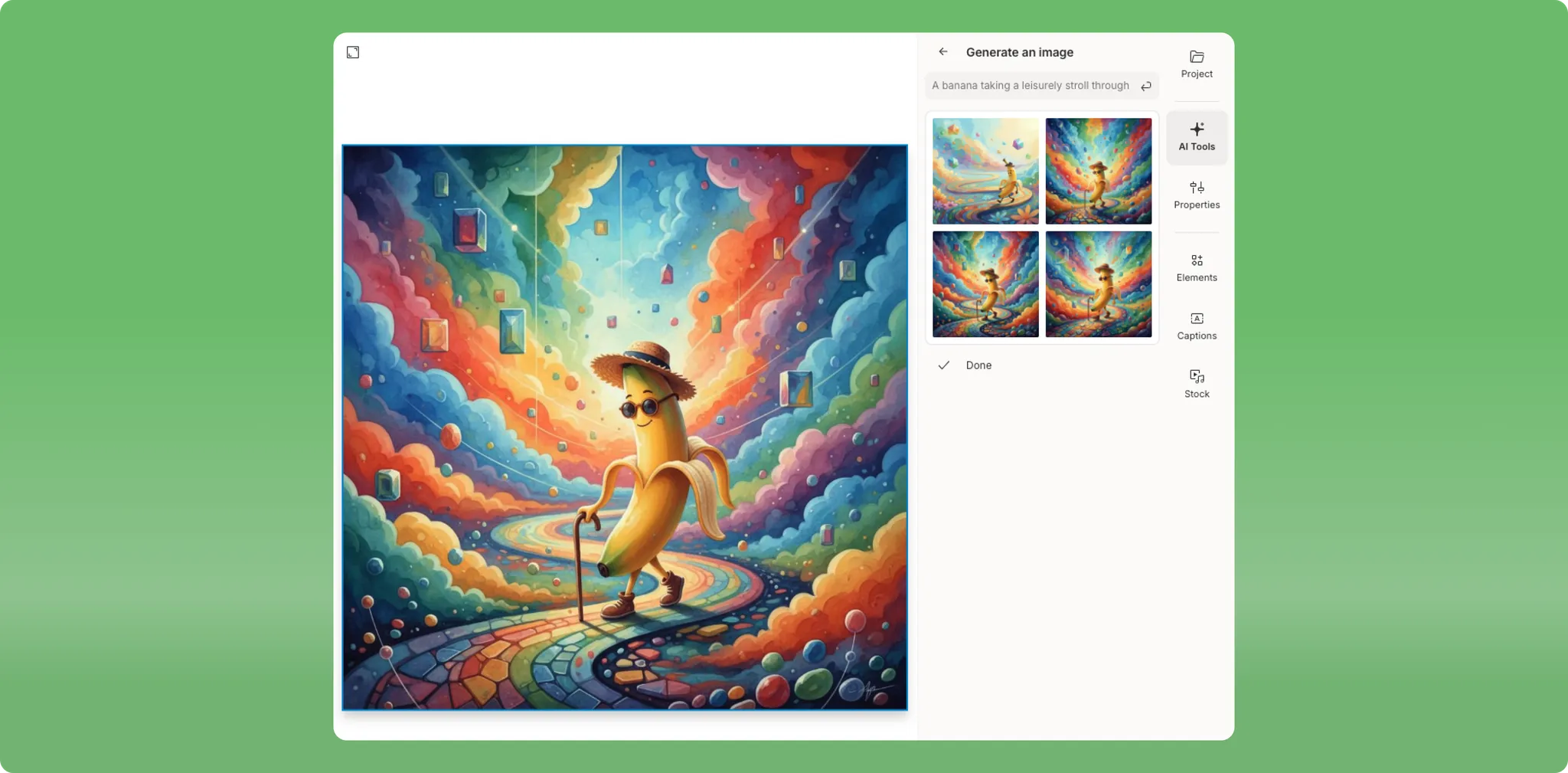
Descript’s late August update adds an in‑app option for “nano banana,” Google’s image model focused on keeping characters and objects consistent across edits. It targets creators who need on‑model, repeatable visuals for thumbnails, ad variants, and episodic storytelling. For ongoing details, see the Descript changelog: Descript Changelog.
What “Nano Banana” Does and Why It Matters
Google’s “nano banana” is widely described alongside the Gemini 2.5 Flash Image wave and is designed to keep a subject “the same person or thing” as you iterate. With prompt‑level edits, creators can change lighting, wardrobe, pose, or background while maintaining the face, proportions, and key traits that define a character or product.
Google aims to be top banana in AI image editing. Axios
Confirmed: Identity, Editability, and Watermarking Are Front and Center
- Identity preservation: The promise is “same person, new prompt,” with clear upside for creators and obvious risks to watch. PC Gamer captures both sides and the rising deepfake concern. PC Gamer.
- Prompt‑driven edits: Natural‑language changes make it easier to adjust wardrobe, lighting, or environment without blowing up proportions. Scenario published an overview for creators focused on consistent characters. Scenario: Nano‑Banana – The Essentials.
- Provenance by default: SynthID‑style watermarking is part of the package, aligning with platforms moving toward provenance requirements.
Momentum Beyond Descript
The “banana” wave is spreading into third‑party tools and developer stacks:
- Scenario outlines nano banana’s capabilities for consistency‑first editing and character work. Read the overview.
- Eachlabs announced Nano Banana support in its image tooling, underscoring demand for fast, on‑model edits in production workflows. Introducing Nano Banana | Eachlabs.
Why Adoption Is Accelerating Now
- Output reliability now meets speed for brand and channel workflows.
- Policy gravity favors watermarking and provenance signals, which de‑risk adoption for advertisers and larger partners.
- Creator economics improve when small teams can lock on‑model characters for series art, product shots, and ad rotations without time‑consuming retouching.
What It Means for Google’s Ecosystem
The consistency‑plus‑provenance combo fits across Google surfaces and tools: Search trust signals, YouTube thumbnails and series branding, potential near‑device edits on Android and Chrome, brand‑safe generation in Workspace, ad compliance for catalog images, and developer controls for identity strength and guardrails.
Short Timeline: How the “Banana” Craze Broke Out
- Aug 26, 2025: Google’s consistency‑first push hits mainstream coverage, framed as a bid to lead image editing. Axios.
- Late Aug 2025: Descript surfaces nano banana as an in‑app image model option amid broader updates. Descript Changelog.
- Late Aug to early Sept 2025: Third‑party platforms begin documenting nano banana features and integrations for creator workflows.
For Creators: The News, Not a How‑To
The headline is simple: on‑model images are becoming default. You can preserve the same face, body, and product details across iterations, make prompt‑level changes that respect scene context, and export assets with provenance baked in. Expect faster variant testing, fewer manual fixes, and more confidence that your brand mascot, presenter, or hero product will look the same from post to post.
Bottom Line
Descript’s addition of nano banana lands at a pivotal moment. Google is pairing identity consistency with traceable outputs and pushing it into tools creators already use. Coverage frames the move as a strategic bid to lead image editing, and early third‑party integrations show how quickly consistency‑first workflows are moving from demos to production.