OpenAI is rolling out new GPT-5.6 options inside ChatGPT, Sol, Terra, and Luna, along with a UI control that lets you dial up reasoning effort mid workflow. The official overview is here: GPT-5.6: Frontier intelligence that scales with your ambition. If you’ve been using ChatGPT like a production tool (scripts, campaigns, briefs, client deliverables), this is less “new model drop” and more “your default workflow just got knobs.”
And yes: this is OpenAI acknowledging a truth creators have been yelling for a year: not every prompt deserves flagship compute, but the prompts that do deserve it should not require a ritual sacrifice of re prompts and thread hopping.
What shipped in ChatGPT
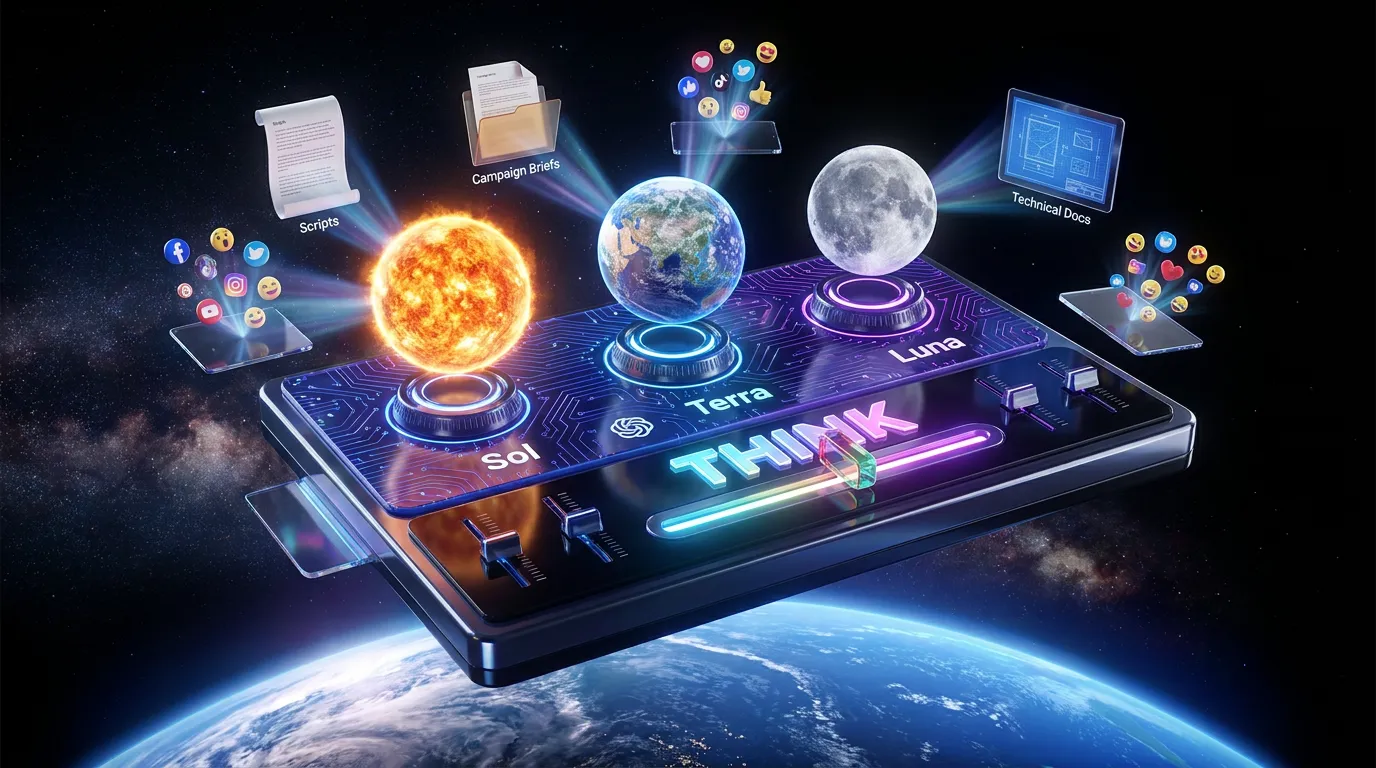
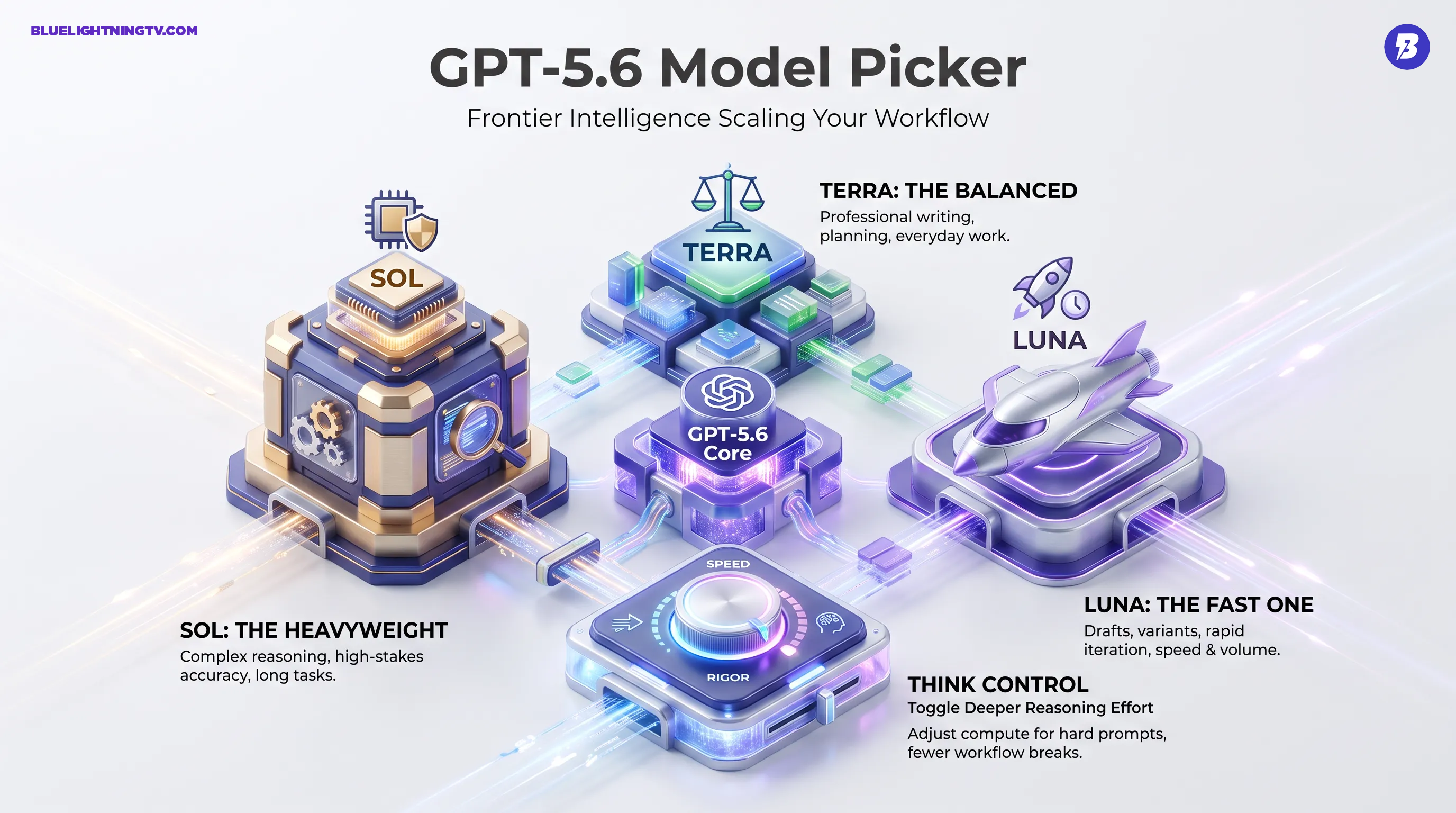
GPT-5.6 is not one model. It is a lineup, and the names are basically telling you how OpenAI wants you to use them:
- GPT-5.6 Sol: the heavyweight. Built for harder reasoning, longer tasks, and high stakes accuracy where “sounds right” is not good enough.
- GPT-5.6 Terra: the balanced option. The “most work days are normal” model, strong enough for professional writing and planning without the full Sol bill.
- GPT-5.6 Luna: the fast one. Tuned for speed and volume, meant for drafts, variants, and rapid iteration.
If you want OpenAI’s own description of the lineup, their preview explainer is the clearest single reference: A preview of GPT-5.6 Sol, Terra, and Luna.
Sol is the “don’t embarrass me” model
Sol is positioned as the top tier choice when the work is complex, multi step, or sensitive to mistakes. In practical creator terms, this is the model you reach for when the output is going to end up in:
- client facing strategy (positioning, messaging frameworks, competitive summaries)
- scripted narratives that must stay coherent across long arcs
- technical or product writing where hallucinations can become “oops, we promised a feature we do not have”
The upgrade is not that Sol can write. It is that Sol is designed to hold up when you ask it to think, plan, and verify, not just generate.
Luna is the “ship the batch” model
Luna is for the everyday grind: speed, throughput, and “give me 30 options that are all usable.” If your workflow includes:
- ad copy variant packs
- social captions and hooks
- thumbnail titles and descriptions
- quick rewrites into different tones
Luna is the model that keeps momentum high without turning each iteration into a slow, expensive ceremony.
The “Think” control
The most workflow relevant change is the ability to toggle deeper reasoning effort when a prompt is actually hard. OpenAI documents the GPT-5.6 behavior and reasoning options for ChatGPT here: GPT-5.6 in ChatGPT.
This matters because most creator sessions are not one task. They are a mix:
- easy: “rewrite this paragraph tighter”
- medium: “outline a 10 minute video with beats and b roll notes”
- hard: “build a campaign narrative that stays consistent across email, landing page, and paid social and does not contradict our pricing or claims”
Historically, creators dealt with that mix by either:
- overpaying (running everything on the biggest model), or
- overprompting (splitting tasks into tiny steps because the model drifted), or
- tool hopping (different models, different tabs, different failure points)
Reasoning control is OpenAI moving those tradeoffs into the interface, which is exactly where it belongs if ChatGPT is supposed to be a production surface, not just a demo box.
What changes day to day
For creator teams, “Think” (or reasoning effort selection) effectively becomes a quality throttle you can use when you need it, and ignore when you do not. The benefit is fewer workflow breaks:
- less “it forgot constraint #4”
- less “it gave me a plan but did not follow it”
- less “it sounds confident but the logic is wobbly”
That is not hype. That is time back.
Plan and access reality
Access varies by plan and product surface, and OpenAI has been increasingly explicit that not everyone gets the same model picker experience. The cleanest reference for what reasoning levels and options are available per tier is still the help doc: GPT-5.6 in ChatGPT.
The important operational point: your team should assume uneven rollout. Two people can both “have ChatGPT” and still have different:
- model choices
- reasoning controls
- rate limits
- default behaviors
If you run shared workflows (templates, SOPs, prompt libraries), document which steps require Sol level rigor versus Luna level speed. Otherwise you will get inconsistent outputs and blame the prompt when the real culprit is model routing.
Why creators should care
This update is really about routing: matching the compute to the moment. OpenAI is making the “pick the right engine” habit feel normal inside the most mainstream AI product on earth. That is a big signal for content ops.
Here is a simple way to think about it:
| Workflow moment | Best fit | Why it wins |
|---|---|---|
| High volume drafts | Luna | Speed plus iteration without drama |
| Balanced daily work | Terra | Strong quality at practical cost |
| High stakes deliverables | Sol plus Think | More careful reasoning, fewer costly misses |
That is the shift: model choice becomes part of the creative process, like picking a camera lens or an editing codec. Not because it is fun. Because it is how you keep quality high without turning every task into a slow motion compute bonfire.
This pairs with OpenAI’s “defaults” push
It also fits a pattern we have been tracking on Blue Lightning: OpenAI keeps upgrading the baseline experience so everyday work requires less babysitting. Earlier this year, OpenAI made GPT-5.5 Instant the default in ChatGPT, with the same “less cleanup, more usable output” framing. If you missed it, here is our internal write up: GPT-5.5 Instant Becomes ChatGPT Default: Why It Matters.
GPT-5.6 extends that idea, but with more explicit controls: speed models for throughput, heavy models for rigor, and a visible switch for when you need the model to try harder.
Implications for teams
This rollout is a reminder that the “one model to rule them all” era is over, at least inside serious creator operations. The teams that benefit most from GPT-5.6 are the ones who treat AI like infrastructure:
- They separate drafting from finalization.
- They standardize outputs (formats, constraints, checklists).
- They escalate effort intentionally, instead of accidentally.
The win is not that AI can do more. The win is that you can choose when it should do more, and stop paying that cost when it should not.
Bottom line: GPT-5.6’s Sol, Terra, Luna lineup plus reasoning effort controls is OpenAI getting more honest about how creators actually work: fast most of the time, careful when it counts. If you build content at volume, that is not a vibes update. That is a workflow upgrade.