Microsoft MAI‑Image‑1 Enters LMArena’s Top 10
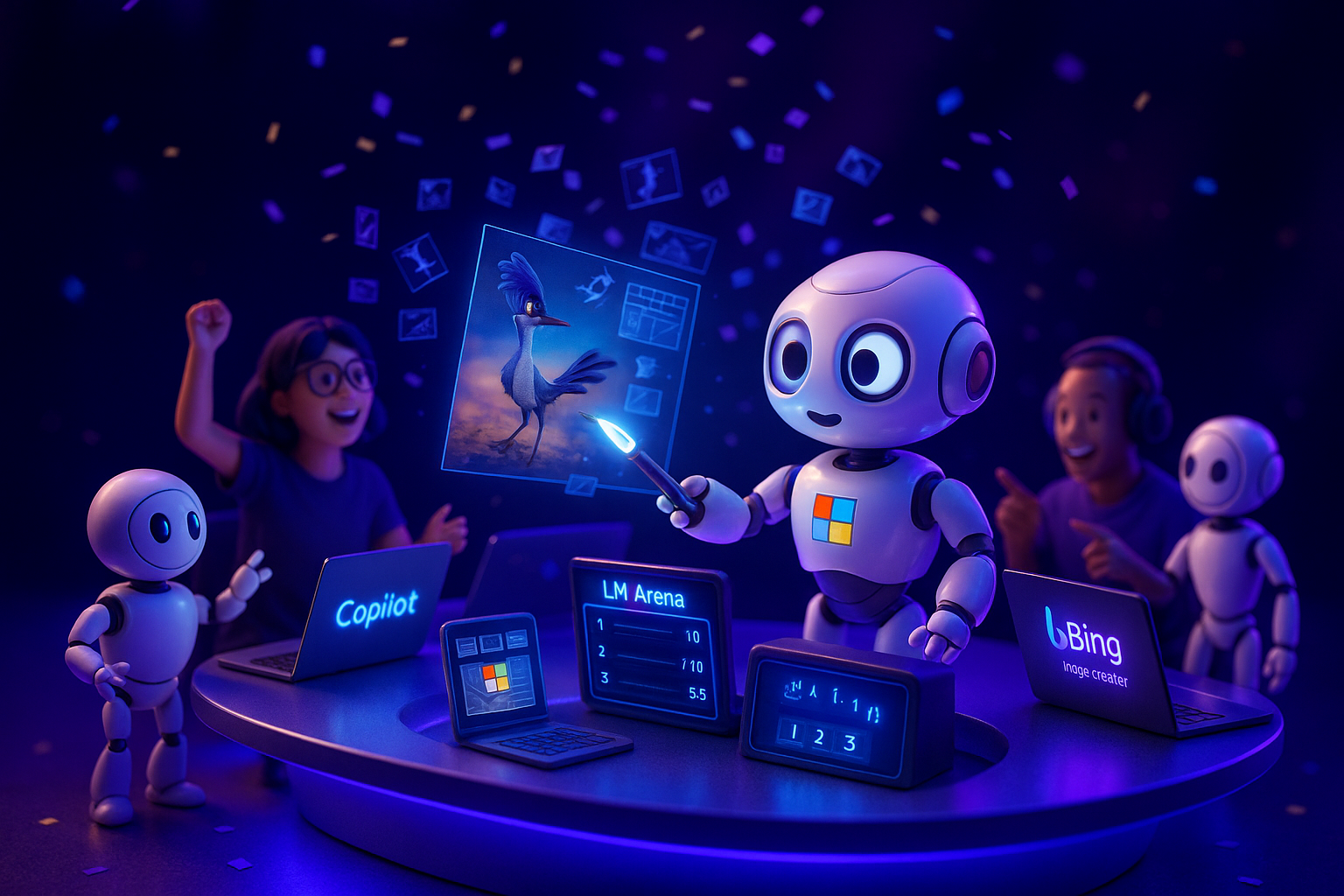
Microsoft has introduced MAI‑Image‑1, its first fully in‑house text‑to‑image model, and it’s already debuting in the top 10 on the public LMArena leaderboard. For creators and brand teams, the headline is straightforward: Microsoft is moving beyond licensing and bringing its own visual generator to market, aiming for photoreal quality and reliability that can stand up to day‑to‑day creative demands.

What MAI‑Image‑1 Does, In Brief
MAI‑Image‑1 is a text‑to‑image system that focuses on photorealism, fine‑grained lighting control, and material realism. Microsoft positions the model for the kinds of work creators actually ship, including campaign visuals, pitch comps, storyboards, editorial spots, and product renderings, rather than novelty outputs. The company says the model was shaped with input from working artists and designers and trained on curated data to reduce repetition and broaden stylistic range.
For creative teams under deadline pressure, the reported differentiator is speed paired with control. The goal: faster rounds of ideation and fewer do‑overs because of lighting quirks, awkward textures, or generic “AI look” artifacts.
The news: MAI‑Image‑1 is Microsoft’s first public, homegrown image generator, and it’s already performing in community head‑to‑head tests. For creators, this points to a new, high‑volume option that is built to prioritize photoreal output and iteration speed.
Why the LMArena Debut Matters
MAI‑Image‑1’s early placement on LMArena is significant because the leaderboard is driven by side‑by‑side comparisons on real prompts, with votes from a broad user base. That makes it a visible, ongoing test of practical quality, not just benchmark paperwork. You can see the live standings on the LMArena Text‑to‑Image leaderboard, where MAI‑Image‑1 is competing against popular closed and open models.
For creative pros, those public matchups help answer the immediate question: does this model deliver the look, sharpness, and prompt fidelity I need for client‑facing work?
Where This Fits in Microsoft’s AI Strategy
MAI‑Image‑1 is part of a broader in‑house push that also includes MAI‑Voice‑1 (expressive speech) and MAI‑1‑preview (a mixture‑of‑experts text model). Microsoft outlined that strategy in its announcement of two internal models earlier this year, underscoring a shift toward first‑party AI that can be tuned faster and integrated more deeply across the product stack. More on that context here: Two in‑house models in support of our mission.
For creators, the practical consequence is more choice and potentially tighter integrations with tools you already use. Microsoft has indicated plans to bring MAI‑Image‑1 to Copilot and Bing Image Creator, which would put a top‑tier image generator inside search, productivity, and enterprise environments, not as a lab experiment but as a supported feature set.
What’s New Compared to the Status Quo
- Photoreal emphasis: Microsoft is centering surface realism, nuanced lighting, and consistent shading, areas where many models still wobble under client scrutiny.
- Less repetition in outputs: The model has reportedly been tuned to avoid the “samey” visual tropes that can slow down rounds of revision.
- Faster ideation loops: Speed and prompt responsiveness are framed as core to the experience, essential for marketing sprints, pitch decks, and editorial deadlines.
- Community‑validated performance: LMArena’s head‑to‑head format puts MAI‑Image‑1 on public trial against the models people already use.
Industry Context and Early Reaction
Microsoft’s move to field its own image model changes the competitive map, especially as enterprise buyers look for consolidated solutions in ecosystems they already trust for identity, security, and compliance. Early coverage notes the signal here: Microsoft is not just a distribution channel for third‑party models, it is building its own foundation for visual generation. For a snapshot of that reaction, see Windows Central’s report on the top‑10 debut: Microsoft’s new in‑house image generator has already cracked the LMArena benchmark’s top 10.
Availability and Rollout
MAI‑Image‑1 is live for public evaluation through LMArena now, with Microsoft indicating planned integrations into Copilot and Bing Image Creator after additional productization and safety work. That staged approach aligns with a pattern we are seeing across the industry: public stress‑testing first, then broader distribution once moderation and reliability measures are tuned for scale.
For Creators: What’s Immediately Relevant
Microsoft is positioning MAI‑Image‑1 for practical, production‑adjacent workflows. The headline for creators and marketers is less about model architecture and more about outcomes: photoreal renders that stand up in comps and decks, faster iteration under tight deadlines, and options that reduce the need for heavy post‑generation edits.
| MAI‑Image‑1 at a Glance | Details |
|---|---|
| Model type | Text‑to‑image generator, built in‑house by Microsoft |
| Core focus | Photorealism, nuanced lighting, material realism, controllable outputs |
| Current status | Publicly tested on LMArena; top‑10 debut |
| Planned integrations | Copilot and Bing Image Creator (post‑productization and safety hardening) |
| Intended users | Creators, marketers, designers, editorial teams, product and brand studios |
| Positioning | Faster iteration with higher realism for client‑ready visuals |
Why This Matters for Non‑Technical Teams
Most creative shops are not building tools, they are shipping work. The relevance of MAI‑Image‑1 is not in the training regimen; it is the operational reality that a major platform provider is delivering a native image model that aims to meet commercial standards, and doing it inside the workflows teams already rely on. If Microsoft delivers on the speed‑quality balance and integrates the model seamlessly, the friction between prompt and presentation could shrink meaningfully for brand builders and storytellers.
Risks and Unknowns to Watch
- Consistency across edge prompts: Public testing is designed to surface failure modes. Watch how the model handles unusual compositions, complex lighting, and fine text details over time.
- Style diversity vs. house look: In‑house tuning can accelerate improvements, but creators will be watching to ensure the model does not settle into a narrow aesthetic.
- Safety and moderation balance: As integration proceeds, how Microsoft calibrates guardrails will matter for commercial usability in sectors like fashion, news, and education.
- Enterprise readiness: For larger teams, questions around governance, usage rights, and watermarking standards will remain front‑of‑mind as integrations roll out.
The Bigger Picture
MAI‑Image‑1’s arrival reflects a broader industry realignment: platform companies are investing in their own generative stacks so they can move faster, lower costs, and close the loop with user feedback. Microsoft has already outlined that approach with its other in‑house models, including MAI‑Voice‑1 and MAI‑1‑preview, which it describes in its in‑house models overview. For creators, more first‑party options typically translate to more leverage, clearer roadmaps, and less tool lock‑in.
Key Takeaways
- Microsoft’s MAI‑Image‑1 is its first in‑house image model and has entered the LMArena top 10, signaling strong early performance in public, head‑to‑head comparisons.
- The model emphasizes photoreal outputs and fast iteration cycles, aimed squarely at commercial creative work.
- Microsoft plans to integrate MAI‑Image‑1 into Copilot and Bing Image Creator after additional safety and productization steps.
- The launch fits a broader in‑house AI strategy, offering creators more choice and tighter connections to everyday tools.
- Public testing on LMArena provides ongoing, transparent performance signals for teams deciding where to place their bets.
For the creative community, spanning visual designers, writers, photographers, brand builders, and video teams, the impact will be measured not in model specs but in how reliably MAI‑Image‑1 shortens the path from a prompt to a polished visual that earns client approval. Early signs suggest Microsoft intends to compete on that ground directly.