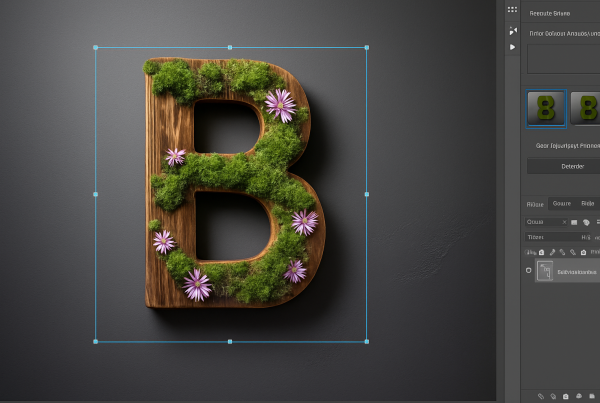

From Ordinary to Extraordinary – Turning Objects into Gold with Photoshop
In the world of digital art and design, nothing says “luxury” quite like gold. Its allure and prestige can elevate visuals to new heights. But how do you go about transforming an ordinary object into something golden and wondrous? Enter Photoshop, the titan of image editing software. Today, we’re diving deep into how you can use Photoshop techniques to seamlessly turn any mundane object into a shimmering gold masterpiece.
The Golden Process – Steps to Transform
The process begins with a background image, such as a photo of the iconic Statue of Liberty. This guide will not only show you how to create a gleaming gold effect but also how to wield the power of Photoshop’s AI tools for maximum efficiency. Let’s dive into the steps:
Layering and Separation
- Duplication: First, make a copy of your original image. This ensures you always have the untouched version as a fallback.
- Selection: Use the Quick Selection tool and click “Select Subject” to isolate your primary object—in this case, the Statue of Liberty.
- Refinement: Press ‘Q’ to activate Quick Mask mode for precision checking. Areas not included or incorrectly selected can be refined by targeting them with the selection tool.
Removing Distractions
To achieve the best gold effect, we need to eliminate any background noise that could distract from the central object. Do this by:
- Cutting and Pasting: With our object selected, cut and paste it onto its layer to separate it from the background.
- Filling the Gap: On the middle layer, use Photoshop’s generative fill to replace the object area with contextual backgrounds. This AI feature creates variations of sky or surrounding space to fill the gap seamlessly.
- Merging Layers: Once satisfied with the AI’s choice, merge the generative layer with the background.
Utilizing Smart Objects and Filters
Converting the copied layer of the object into a Smart Object allows non-destructive edits.
- Surface Blur: This specialized blur effect smoothens out noise and imperfections while maintaining the sharpness of the edges, crucial for that perfect golden glint.
- Brightness and Shadows: Manipulate shadows to bring out or reduce details, setting the stage for subsequent color manipulation.
Adding the Midas Touch
Now comes the heart of the transformation—making our object turn from ordinary grayscale into resplendent gold.
Black and White Adjustment
- Change the statue’s layer to black and white, producing a more metal-ready backdrop.
Curving Towards Metal
- Using the Curves tool, craft a landscape of highs and lows by adjusting control points along the diagonal line. This will introduce that metallic sheen, essential to the gold appearance.
Achieving Gold through Color Balance
This is where all the magic happens. Using the Color Balance adjustment layer, we’ll tweak tones to get the gold hue just right. Adjust:
- Midtones: Set Cyan/Red to 30 and Yellow/Blue to -84.
- Shadows: Set Cyan/Red to 21, Yellow/Blue to -52.
- Highlights: Set Cyan/Red to 36, Yellow/Blue to -21.
Don’t forget to tick “Preserve Luminosity” for a consistent tonal balance.
Final Touches – Subtle Darkening
To ensure the color isn’t too harsh, use the Levels adjustment to subtly darken midtones, creating that perfect, polished gold texture.
Conclusion
With Photoshop’s robust suite of tools, combined with a splash of AI ingenuity, turning an average object into a gold masterpiece becomes effortless. Whether you’re designing for luxury advertising, creating digital art, or simply exploring the potential of digital alchemy, this golden technique is a must-have in your creative arsenal. So, why not dive into Photoshop and start crafting your golden wonders today?
For more tips and tricks on creative transformations and design magic, check out Blue Lightning’s other tutorials. Remember, every great design starts with curiosity and a sprinkle of digital magic.