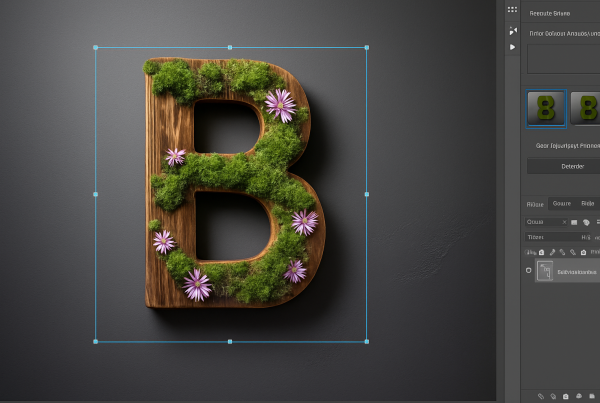

Master the Art of Digital Branding: Leave Your Mark on Wood Without Setting Anything Ablaze
Ever wondered how some digital artworks look as though they’ve been meticulously branded onto a piece of wood? That entrancing blend of rustic texture and modern design is more accessible than you might think—all thanks to the marvels of Adobe Photoshop. This digital age alchemy steeped in the aesthetics of bygone craft is what we’re diving into today.
With a sprinkle of Photoshop magic and a pinch of creativity, you can transform any image or text into a wood burn effect that looks authentic enough to leave you reaching for the smell of pine sap and charcoal.
The Starting Point: Your Toolkit and Initial Steps
Before we endeavor to bring a touch of the organic to the sterile screens before us, it’s worth mentioning that the wood texture and logo design used in the tutorial are available for download in the video description. However, the beauty of this technique lies in its versatility. The wood burn effect will vary beautifully depending on the texture of the wood you choose—be it smooth and dark or rugged and golden.
- Set Your Scene: Begin by opening your canvas in Photoshop. If you’re starting from scratch, use the Type Tool to position your text. Remember, when setting your foreground and background colors, D is your shortcut key to default to black and white.
- Layering the Magic:
- Copy your text layer, create a new layer below, and fill it with white.
- Merge these layers for your black-on-white groundwork.
- Refining the Selection: Head over to the Select menu to pluck that black shape right out of the background. This will serve as your template on which we’ll base our fiery transformation.
Amplifying the Grain: Wind and Blur For Depth
With your black image on a transparent background perfectly poised, it’s time to add some pizzazz with filters:
- Stylize the Wind: By tapping into the Wind filter, you replicate the grain lines of wood—tiny pathways that add dimension to your image. Apply this filter in alternating directions to infuse natural energy.
- Blurring the Boundaries: A whisper of Gaussian Blur (just 1 pixel) softens hard edges, enhancing that organic, burned-in allure.
Unleashing the Contrast: Levels and Blend Modes
Once you’ve laid down your foundational filters, it’s all about tweaking the image to embody that traditional wood-burn effect:
- Adjust Levels: Control the output black to about 72. This will help deliver a more genuine burnished look.
- Blend for Drama: Set your Blend Mode to Color Burn and adjust opacity to 60 percent. This strengthens the artwork’s bond with its faux wood medium.
Finessing the Fade: The Art of Feather and Style
To truly craft an image that feels seared and worn into its wooden surface, apply these final flourishes:
- Feather the Selection: By feathering your selection a modest 2 pixels, you create a smooth transition that mimics the natural diffusion of heat and pigment on wood.
- Layer Style Enhancements:
- Bevel & Emboss: Emulate wood grain depth with an Outer Bevel and smooth technique, bringing some of the wood’s rougher character into the digital realm.
- Play with Shadows: A gentle inner shadow with reduced opacity further ingrains the text into its background as if seared into its grain.
- Finishing with Fill: A fill reduction ensures your added effects shine through, imbuing the style with authenticity.
With these digital artisanship steps, you have the complete toolkit to create arresting visual pieces worthy of any wall or virtual gallery. Whether transforming a logo into a branded emblem or infusing digital art with a woodsy, tactile quality, the options are limitless. Enjoy the mastery of digital technique blended with the age-old charm of wood burning—all without striking a match.