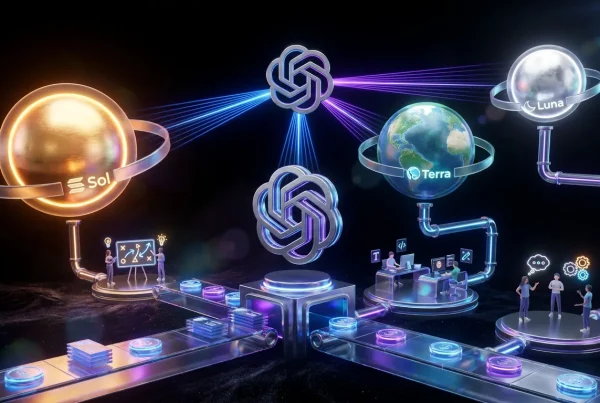
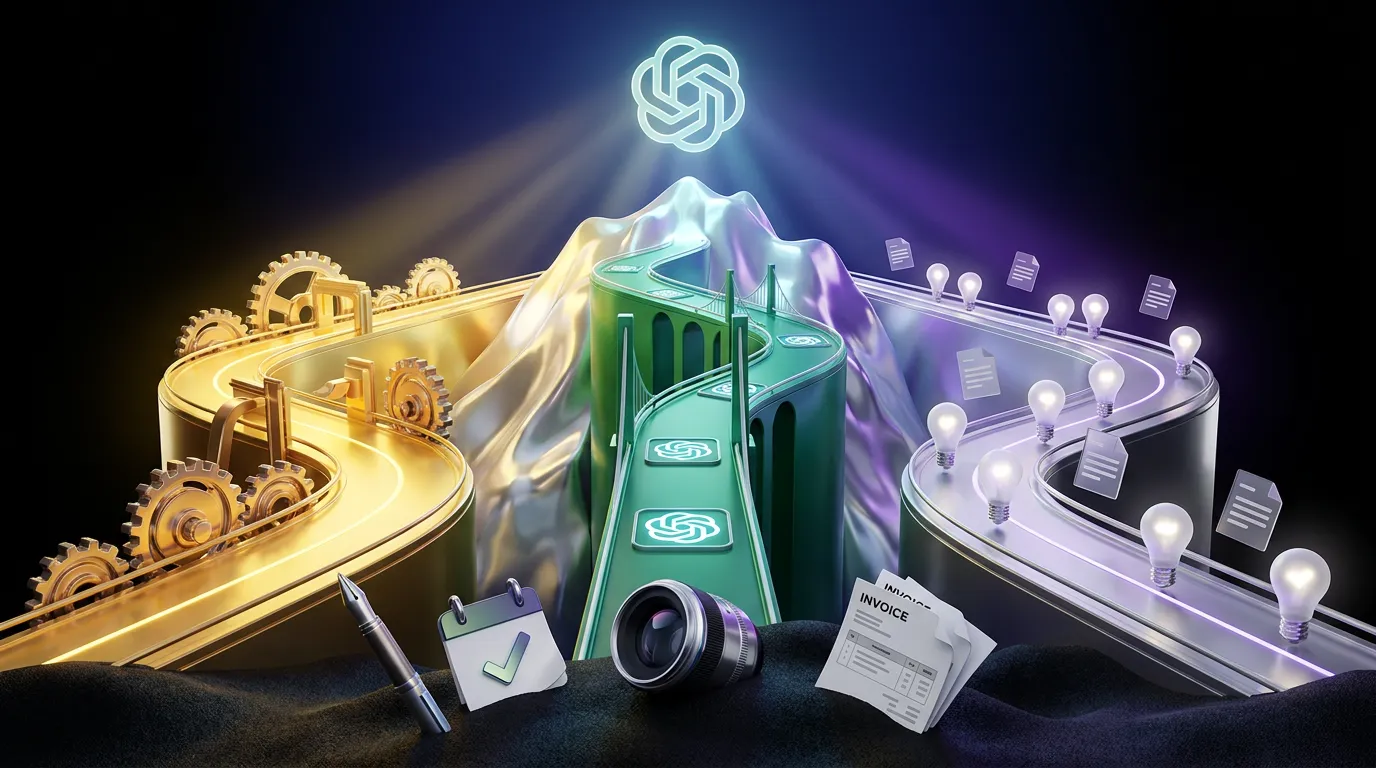
OpenAI is previewing GPT-5.6 as a three-tier family: Sol, Terra, and Luna. The announcement is worth reading straight from the source: Previewing GPT-5.6 Sol. The headline is not “new model, bigger number.” It is that OpenAI is making model routing a first-class concept: pick the lane that matches the work, instead of burning flagship tokens on tasks that should be cheap, fast, and automated.
For creators and content teams, this is the kind of update that shows up in your calendar and your invoice, not your group chat. It is a product move toward predictable production: generate wide, refine smart, polish carefully, all inside one model family.

The shift is not just a better model. It is a more usable operating model, where cost and quality tradeoffs are explicit.
What actually shipped
GPT-5.6 arrives as three clearly labeled options that map to how content work really happens.
- Sol: flagship quality and deeper multi-step work, positioned for harder reasoning and more complex agentic workflows. OpenAI highlights Sol reasoning effort modes including max and ultra.
- Terra: the balanced tier, positioned as near GPT-5.5-level performance at roughly half the cost for sustained day-to-day production.
- Luna: the throughput tier, fast and cost-first, aimed at high-volume generation where iteration beats nuance.
That is the practical win: the same team can stop treating every task like it deserves a Ferrari. Most of your pipeline is closer to “reliable hatchback” work.
If you want the internal COEY context on why this “right model for the step” approach keeps showing up, this earlier breakdown maps to the same operational mindset: GPT‑5.4 Mini vs Nano: Faster, Cheaper Content Ops.
Pricing stays legible
OpenAI published token pricing and preview details via its Help Center doc: Preview GPT-5.6 Sol, Terra a Luna.
Here is the pricing snapshot OpenAI lists per 1M tokens:
| Tier | Input ($/1M) | Output ($/1M) |
|---|---|---|
| Sol | 5.00 | 30.00 |
| Terra | 2.50 | 15.00 |
| Luna | 1.00 | 6.00 |
This matters because pricing is not just accounting. Pricing shapes behavior. When a team can see the tradeoff clearly, they actually design workflows around it instead of “just use the best model and pray.”
Why tiers matter now
Model families are not new. What is new is OpenAI packaging tiers as routing signals, names you can operationalize.
Model names as routing
Sol, Terra, and Luna are basically shorthand for three recurring questions every production team asks:
- Do we need maximum depth? (Sol)
- Do we need dependable quality at scale? (Terra)
- Do we need a mountain of iterations? (Luna)
If you have ever watched someone generate 200 headline variants on a flagship model, you have already met the problem Luna is trying to fix.
“Max” and “Ultra” are a tell
Sol’s reasoning effort modes (like max and ultra) are OpenAI acknowledging something creators feel daily: multi-step work breaks when the model loses the plot midstream. More effort modes will not make every output brilliant, but they are aimed at reducing the restart spiral on complex tasks.
What changes for creators
Most creator teams do not need a single genius model. They need a system that supports how creative work actually moves: messy drafts, revisions, formatting, QA, and final polish.
GPT-5.6’s tiers make a three-stage pipeline feel normal.
The staged pipeline pattern
- Generate widely (Luna)
2. Refine and standardize (Terra)
3. Approve and de-risk (Sol)
That is how humans already work: brainstorm a lot, choose a few, polish the winners. GPT-5.6 just makes the economics match reality.
Routing is not a nice to have. With pricing this spread out, routing becomes the difference between scalable content ops and a budget bonfire.
Where each tier fits
Here is the creator-operations view, not the benchmark-bragging view:
- Luna: hooks, headlines, alt text, metadata, platform formatting, A/B variants, quick rewrites, “give me 40 options.”
- Terra: campaign packs, repurposing, newsletter drafts, localization drafts, structured longform where tone and coherence still matter.
- Sol: strategic positioning, final voice pass, sensitive brand work, complex synthesis, multi-step coordination.
A quiet side effect: humans become better editors when the system makes it cheap to explore options. You spend less time squeezing blood from one prompt and more time selecting and shaping good candidates.
The underrated update: caching controls
Buried in the Help Center details is something content ops people will care about more than another benchmark chart: prompt caching behavior with explicit breakpoints and a minimum cache lifetime.
OpenAI says cached prompts persist for at least 30 minutes. OpenAI also states cache writes are billed at 1.25x the uncached input rate, and cached reads receive a 90% discount on input cost (per the Help Center doc linked above).
That is operationally huge for:
- reusable system prompts (brand voice, compliance rules, formatting specs)
- templated content generation
- batch production runs where the instructions stay stable
If your workflow is basically “same constraints, new inputs,” caching is one of the few levers that can reduce spend without reducing output.
Safety notes, minus the drama
OpenAI positions GPT-5.6 with reinforced safeguards and monitoring. OpenAI’s preview materials also frame Sol as the strictest tier.
For creator teams, the practical implication is workflow:
- fewer off-brand surprises in high-volume runs
- faster review cycles when the model is more consistent about boundaries
- less manual cleanup when outputs are being generated at scale
Tiering does not eliminate risk. It changes where you place your risk. The smart pattern is still: bulk on cheaper tiers, final approval on the strictest and most capable tier, with humans owning the last mile.
Rollout reality: API first
OpenAI is keeping GPT-5.6 in limited preview. Per OpenAI’s preview documentation, access is currently through the API and Codex, and it is not broadly available in ChatGPT yet.
That rollout order matters.
It means the first wave of real advantage goes to:
- tool builders wiring Luna and Terra into automation
- teams already running batch content pipelines
- shops that can actually implement routing logic
If you are mostly chat-first, this may land later, potentially after early adopters have already tuned their pipelines and cost controls.
What to watch next
GPT-5.6’s idea is clean. The real test is production behavior under load.
Three practical questions
- Consistency under batching: Do outputs stay stable when you generate 5,000 variants, not five?
- Routing ergonomics: How easy is it to swap tiers inside real products and vendor tools, not just in docs?
- Effort modes payoff: When is Sol’s extra reasoning effort worth the latency and cost, versus just using better inputs and tighter constraints?
Bottom line
GPT-5.6 is OpenAI making a mature bet: creators do not just want smarter. They want predictable, in cost, speed, and output reliability. Sol, Terra, and Luna are less about a new frontier moment and more about turning AI into something teams can actually run like infrastructure.
For related context on OpenAI pushing defaults and production behavior, see: GPT-5.5 Instant Becomes ChatGPT Default: Why It Matters.