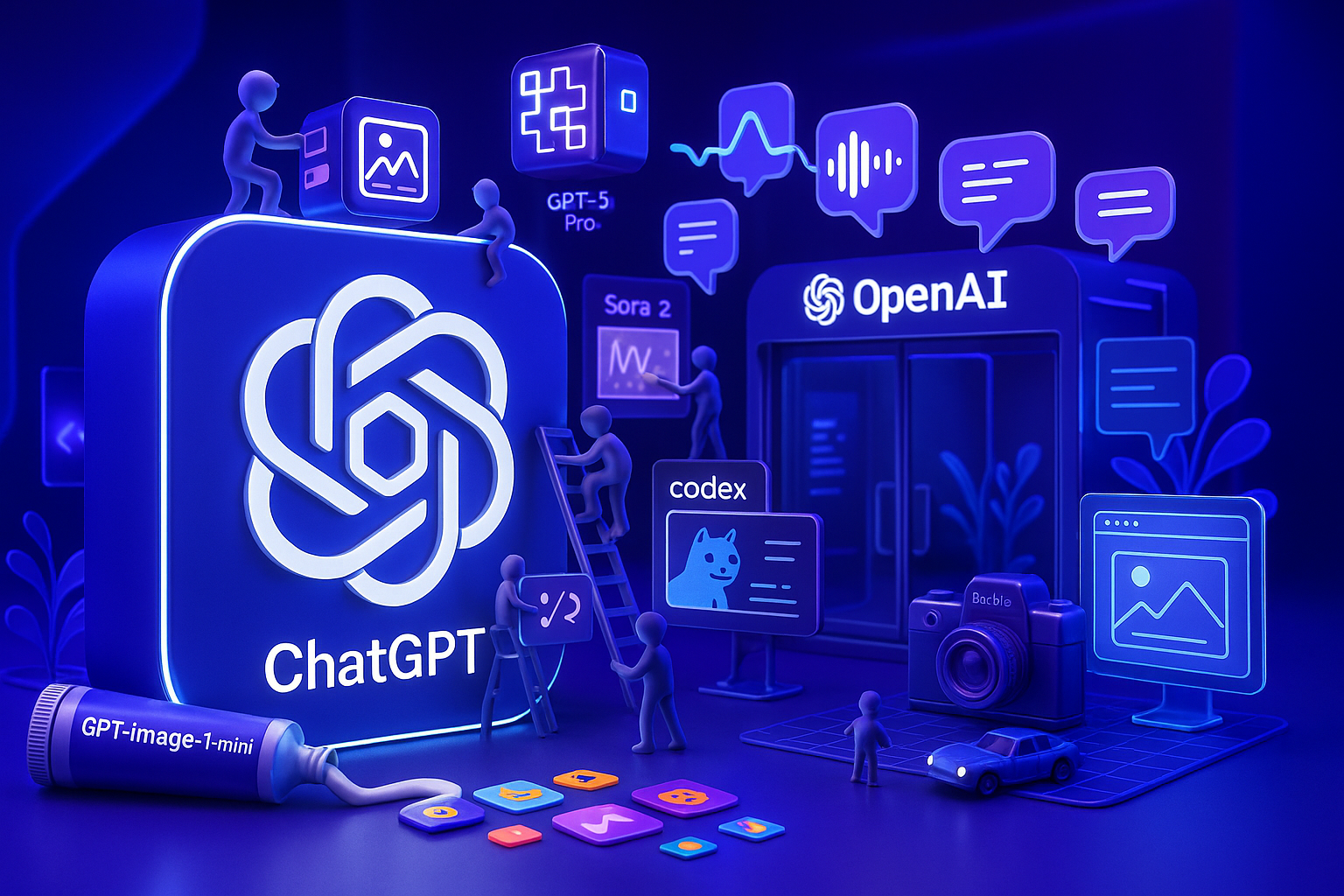
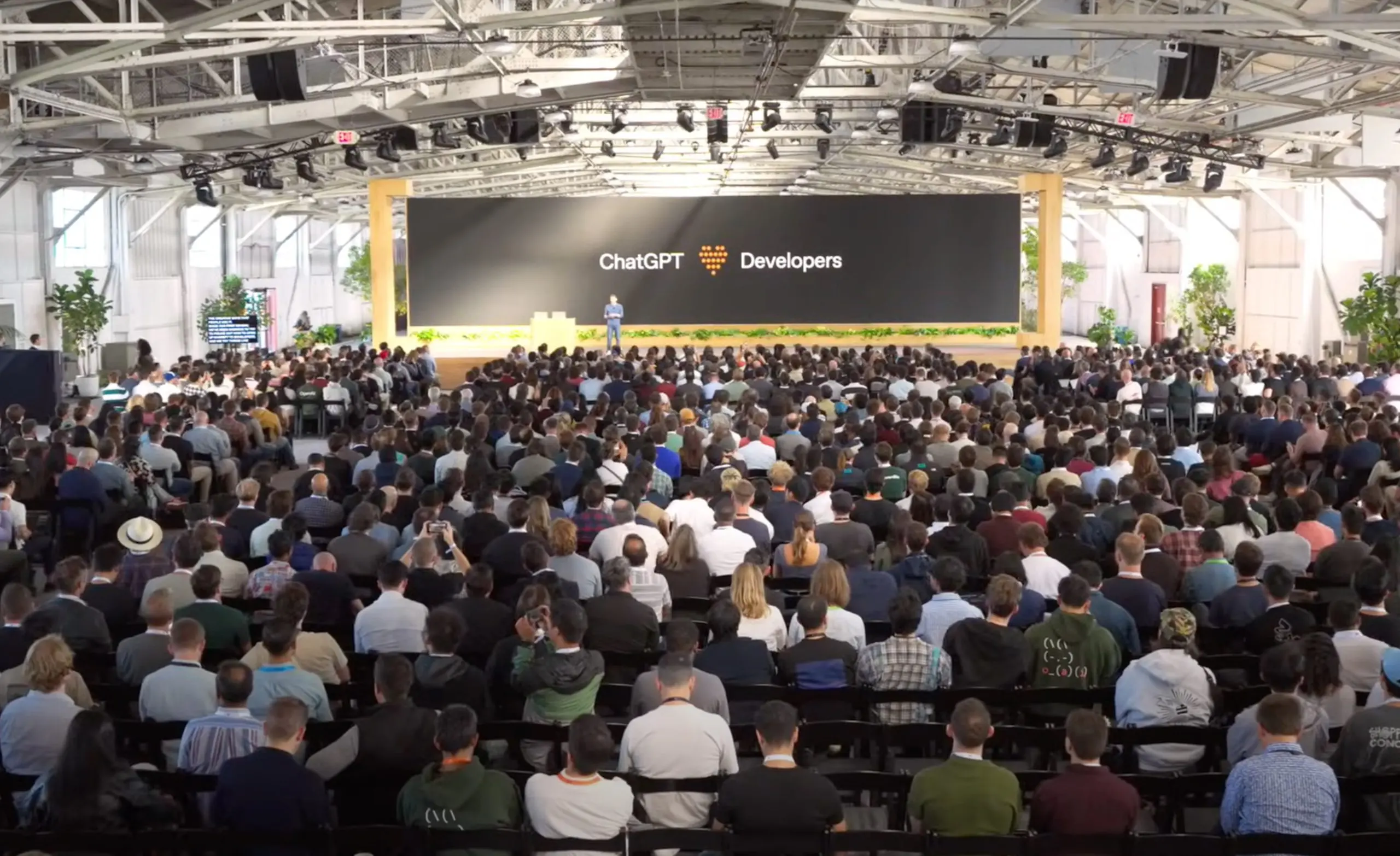
OpenAI’s DevDay 2025 arrived with a flurry of announcements that signal a decisive expansion of what generative AI can do for creative work. The company outlined new capabilities across apps, agents, video, code, voice, and images, many now entering preview or early access, positioning its platform as a more programmable, multimodal layer for modern creative production. Full event details and resources are available via OpenAI’s DevDay announcement hub here.
Apps in ChatGPT: A new distribution layer for creative utilities
OpenAI introduced Apps in ChatGPT, a way to bring focused, app-like experiences directly into ChatGPT across desktop, mobile, and web. These are not traditional plug-ins; they are packaged experiences that can combine data connections, workflows, and custom UI elements in one place, designed to feel native inside the chat interface. For studios, agencies, and startups, the pitch is straightforward: fewer tabs, faster access to capabilities, and the ability to keep creative pipelines inside a single conversational surface that is already familiar to teams and clients.
OpenAI positioned these apps as first-class components with distribution and permissions controls, addressing organizational needs around access and governance for collaborative creative work. The move suggests ChatGPT’s evolution from a single, general-purpose assistant into a platform where specialized, domain-focused apps can coexist and be deployed at scale.
AgentKit and the Agents SDK: From assistants to accountable AI agents
The company also unveiled AgentKit alongside a broader Agents SDK aimed at building more reliable, policy-aware AI agents. The tooling emphasizes multi-step planning, tool use, and integration with external systems while foregrounding observability and controls suitable for production environments. For creative organizations, the key takeaway is the formalization of agent patterns, moving beyond ad hoc scripts into auditable, maintainable services that can coordinate tasks across content systems, asset libraries, and production tools.
The announced approach focuses on reliability and traceability: agents that can be monitored, sandboxed, and governed. That framing is notable as creative teams increasingly ask for automation that is fast without being opaque, and extensible without compromising brand or data integrity. Learn more about the agent tooling here.
Sora 2 in the API: Video generation steps closer to production
OpenAI said Sora 2, its next-generation video foundation model, is coming to developers through the API with enhancements intended to improve realism, duration consistency, and controllability. The company outlined expanded generation modes and safety layers, with a staged rollout that emphasizes brand safety and attribution. The direction is clear: model-level improvements paired with policy and platform guardrails to support commercial creative uses.
Industry interest is immediate. On the day of the event, reporting highlighted an early design collaboration with Mattel exploring Sora 2 for concept development, signaling how enterprise creative teams are evaluating text-to-video in real product pipelines. Coverage via Reuters here. OpenAI’s Sora 2 system card is here.
This is a big deal!
Codex returns: A dedicated code model family focused on production work
OpenAI announced the return of Codex as a dedicated, code-centric model line. The emphasis is on real-time editing, cross-file understanding, and integrated testing, features aimed at production codebases as much as creative coding. For teams building media pipelines, creative tooling, or interactive experiences, the reintroduction of a specialized code model signals a renewed focus on predictable, maintainable outputs where correctness and speed matter as much as creativity.
Codex’s positioning alongside agents suggests a development model where AI not only drafts code but also operates within bounded roles: fetching context, proposing changes, and executing tests under watchful policies. The broader narrative: coding copilots graduating into accountable, instrumented collaborators.
GPT‑5 Pro in the API: Reasoning upgrades land for complex creative workflows
OpenAI also previewed GPT‑5 Pro as an API-accessible flagship designed for stronger multi-step reasoning, structured outputs, and reduced hallucinations. The company is positioning GPT‑5 Pro for research synthesis, long-context analysis, and orchestrating complex, multimodal tasks, areas where creative organizations increasingly blend narrative, data, and design. OpenAI’s page introducing GPT‑5 is here.
While specific benchmarks vary by task, the stated direction is consistent with broader platform moves: more reliable reasoning, tighter control surfaces, and higher throughput to support scaled content operations. For teams managing large volumes of interviews, briefs, or brand guidelines, this marks a notable step in model maturity.
GPT-realtime-mini: Subsecond interactions for live creative experiences
On the voice and interaction front, OpenAI highlighted GPT-realtime-mini, a low-latency model tier designed for responsive, natural interactions over protocols like WebRTC. The focus is on barge-in and realistic turn-taking, enabling experiences where voice, text, and tool calls flow uninterrupted. This tier is positioned to make real-time assistants spanning creative direction, live performance, or audience engagement more accessible in both cost and complexity.
OpenAI has emphasized realtime capabilities across its platform this year, with the Realtime API and low-latency model snapshots forming a foundation for voice-forward applications. Background on the Realtime API and developer tools can be found here.
GPT-image-1-mini: Faster, lighter image generation for daily asset needs
Rounding out the creative stack, GPT-image-1-mini arrives as a speed- and cost-optimized image model tier. The positioning targets the day-to-day needs of design and marketing teams: rapid variations, brand-safe filtering, and iterative exploration without the overhead of larger models. For time-sensitive campaigns and prototyping, the lightweight tier reflects a pragmatic focus on throughput and control rather than maximal resolution alone.
OpenAI framed the image and video models as complementary: lighter tiers for iteration, heavier tiers for final treatments and complex scenes, an approach that aligns with how creative teams already stage work across concept, refinement, and delivery.
At-a-glance: What OpenAI announced for creators
| Announcement | What it is | Why it matters for creators | Availability/Notes |
|---|---|---|---|
| Apps in ChatGPT | Packaged, app-like experiences that run inside ChatGPT | Consolidates creative utilities and workflows in one interface | Rolling out in preview; distribution and permissions emphasized |
| AgentKit + Agents SDK | Tooling to build reliable, policy-aware AI agents | Enables accountable automation across content and production systems | Focus on planning, tool use, observability, and sandboxing |
| Sora 2 (API) | Next-gen text-to-video with enhanced realism and control | Moves concepting and previsualization closer to production quality | Staged API rollout |
| Codex (reintroduced) | Specialized code model family for production development | Targets predictable edits, testing, and multi-file understanding | Designed to pair with agents and IDE/CI workflows |
| GPT‑5 Pro (API) | Flagship reasoning model for complex, structured tasks | Supports long-context creative research and orchestration | Model family overview available on OpenAI |
| GPT-realtime-mini | Low-latency model tier for live, conversational experiences | Enables responsive voice/text interactions for shows, streams, demos | Built on Realtime API foundations |
| GPT-image-1-mini | Lightweight image generation tier | Fast iterations, variations, and brand-safe guardrails | Optimized for throughput and cost; complements heavier models |
Platform posture: A more programmable creative stack
Across announcements, the through line is platformization. Apps bring dedicated experiences into the core UI. Agents formalize repeatable, traceable automations. Video and image models diversify into tiers that mirror real creative stages. Realtime models lower the barrier for live, conversational experiences. And the flagship reasoning model family advances the reliability creators increasingly demand for research-heavy and multimodal work.
OpenAI has indicated phased access for several of these launches with quotas, policy guidance, and safety filtering aligned to brand and enterprise requirements. Additional materials and event context are available via the DevDay hub announcement.
From apps that live where creators already work to agents that promise clarity and control, DevDay 2025’s message is unmistakable: the next phase of generative AI is not just more powerful models, it is a tighter, production-minded ecosystem. For creators across design, writing, photography, branding, and video, the practical impact is focus and speed, delivered inside tools built to scale with the realities of modern content production.