The last few days have been unusually quiet on the brand-new generative tool for creators front. No fresh flagship model drop, no surprise now with video button, no mass migration because someone renamed a feature and broke your workflow on a Tuesday.
That’s not a nothing-burger. It’s a signal. When the release treadmill slows down, the smartest creator teams do not doomscroll for leaks. They harden their pipelines so the next update does not wreck a campaign mid-flight.

And quiet does not mean nothing changed. The most meaningful creator-facing changes right now are the kind that affect workflow stability more than visual wow factor. Think model access shifting inside major platforms and tool ecosystems pushing creators toward multi-model flexibility.
OpenAI’s own product notes show ongoing model churn and access changes inside ChatGPT. Less about new magic, more about which models are available where and when older options disappear. That kind of not-a-launch update still forces teams to adjust. OpenAI’s ChatGPT release notes live here.
Meanwhile, Adobe continues pushing Firefly toward a hub: not just Adobe models, but partner models and custom training. Their Firefly Custom Models feature is in public beta, and Adobe positions it explicitly for style and character consistency at scale. Adobe’s official Custom Models training doc is here.
That combination, fewer headline launches plus more platform-level reshuffling, is exactly why contingency workflows are having a moment.
Why the quiet matters
A calm news cycle used to mean you could relax. In generative AI, a calm news cycle is often when the real work happens: migrations, sunset prep, budget re-forecasts, and what do we do if Tool X changes pricing again spreadsheets.
Creators are reacting to two realities:
- Tool volatility is normal now. Model access, credits, and product tiers move fast even when no one’s throwing a launch party.
- Campaign work hates surprises. If you’re shipping on a schedule, the worst day to discover a dependency is brittle is the day it breaks.
So teams are using quiet time to do the unsexy stuff that keeps production moving.
When launches pause, advantage shifts from who adopted fastest to who can pivot cleanest.
What’s actually changing
The creator stack is getting more complex not because creators love complexity, but because vendors are building ecosystems that keep shifting under your feet.
Model access keeps moving
OpenAI’s model lineup inside ChatGPT has seen ongoing retirements and tier changes documented in OpenAI’s notes. You do not need to panic about every model name. But you do need to plan for the operational reality: the exact model you relied on last month may not be there next month, or it may behave differently under a new default.
That is the kind of change that will not trend on social, but will absolutely show up in your deliverables if you are not tracking it.
Firefly is becoming a control layer
Adobe’s Firefly trajectory is more instructive than any single feature. Custom Models in public beta plus partner model integration point to a world where the interface becomes the workflow anchor and models become swap-in engines behind it.
In other words: the future is not pick one model forever. It is pick the right model today, and do not let your process collapse when tomorrow’s model shows up.
If you missed it, Adobe also outlined broader Firefly expansion across image and video creation, multi-model access, and Custom Models on their blog here.
The operational response
With fewer shiny objects to chase this week, creator teams are doing something healthier: building workflows that survive change.
The watchlist becomes real
Teams are formalizing internal trackers for:
- upcoming or rumored releases that could affect their stack
- changes in plan eligibility and credit systems
- model deprecations and access shifts
- vendor features rolling out in waves (meaning you will not all see it at once)
This is not about speculation. It is about reducing surprise work.
Model-agnostic workflows get prioritized
Model-agnostic does not mean all models are equal. It means your output pipeline does not collapse if you switch engines.
Here is what that looks like in practice:
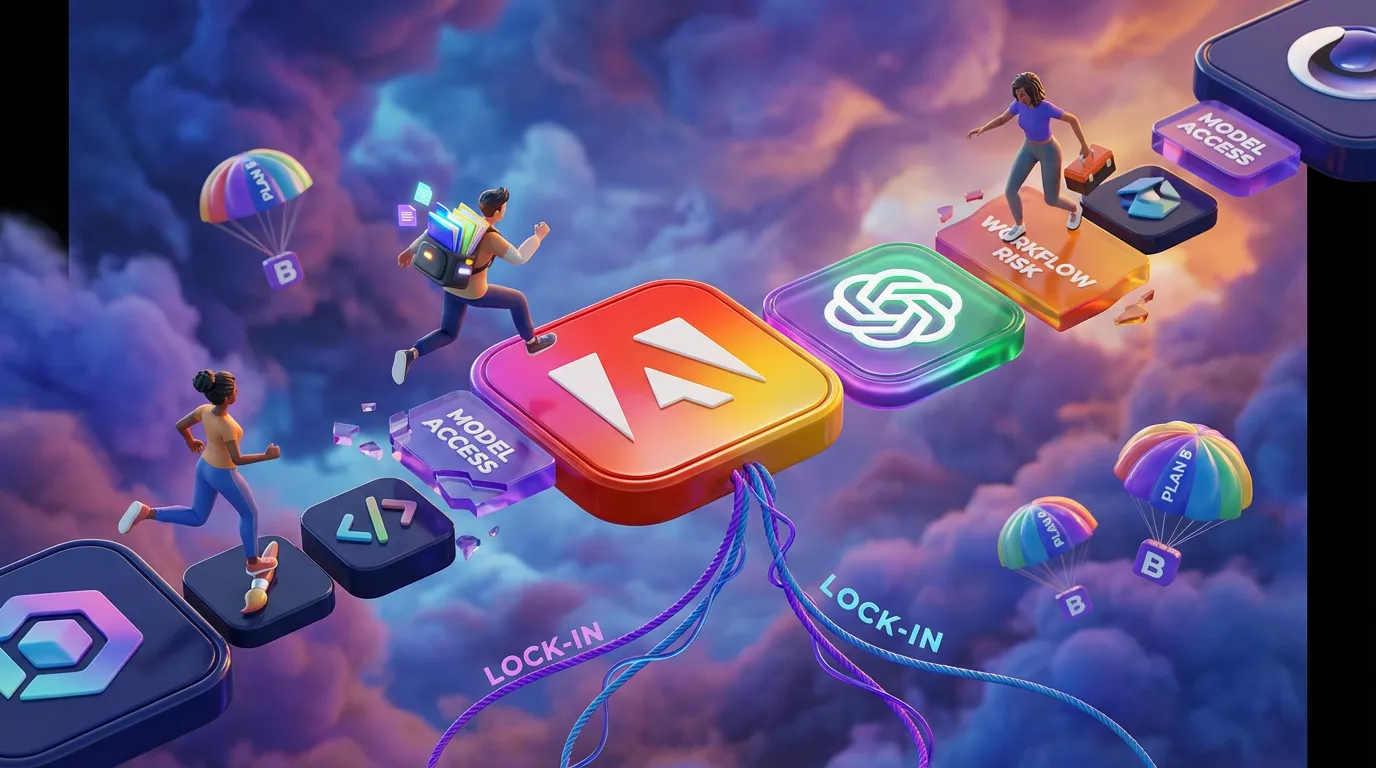
| Workflow area | Lock-in risk | More resilient approach |
|---|---|---|
| Prompt + settings | Stored only inside one tool UI | External prompt library + versioned settings |
| Asset generation | Only one vendor supports your format | Standard exports + consistent naming scheme |
| Project continuity | One-click magic, zero portability | Layered files + intermediates saved consistently |
The theme is portability over convenience. Not because convenience is bad, but because convenience is fragile.
What teams are doing now
Quiet weeks are when competent studios quietly level up.
They’re documenting like adults
Yes, it’s boring. Yes, it works.
Teams are storing:
- core prompts and what they were trying to achieve
- negative prompts or exclusions that mattered
- seed behavior notes (when available)
- model and version used (because output shifts are real)
- known good settings for specific formats (thumbnails, UGC hooks, pitch boards)
The goal is not academic cleanliness. It is reproducibility under pressure.
They’re exporting like they don’t trust anyone
Because they should not.
Studios are standardizing end-of-session exports to avoid platform lock:
- final renders and working files
- stems when audio is involved
- layered image formats when edits will continue elsewhere
- intermediate codecs that are editor-friendly
This reduces the we can’t open that anymore problem later.
They’re piloting tools in parallel
Instead of betting a whole campaign on one new feature, teams are running:
- a primary toolchain for delivery
- a shadow toolchain that can take over if needed
It is the creative equivalent of having a spare tire. Nobody feels cool owning one. Everybody feels cool when they need one.
If you want a concrete example of this trend in video tools specifically, see our recent post CapCut Adds Seedance 2.0 Text-to-Video Inside Timeline.
What this means for your next campaign
If your next campaign plan includes phrases like we’ll use the new model that’s supposed to drop soon, this is your reminder: rumors are not production inputs.
What you can do right now:
- Build a Plan B stack you can actually ship with.
- Keep workflows modular so swapping an image generator does not force a full pipeline rewrite.
- Track official sources for changes that impact access, exports, and defaults. That includes boring release notes.
The creators who move fastest this year will not be the ones who chase every launch.
They will be the ones who can switch tools without losing a week.
What to watch next
Even in a quiet window, the pressure is building in three places:
1) Multi-model hubs
Adobe is explicitly moving Firefly toward choose the best model for the job behavior by integrating Adobe and partner models in one place. That is not just an Adobe story. It is the direction of the whole space: centralized interfaces, swappable engines, fewer tabs.
2) Consistency tools
Custom Models-style features are the antidote to brand drift, character drift, and why does our mascot look different in every output fatigue. The market is slowly admitting the truth: consistency is the killer feature, not novelty.
For more on how Adobe is positioning this in practice, see our post Adobe Firefly Custom Models Beta Tackles Brand Drift.
3) Access volatility
Model retirements, tier gating, and credit policy changes will keep happening. Not because companies are evil, but because compute is expensive and product strategy changes. Either way, your workflow needs to anticipate it.
Bottom line
No major creator-first launches in the past few days does not mean nothing is happening. It means the advantage shifts to teams who use the pause correctly: clean up processes, reduce lock-in, document decisions, and keep stacks portable.
The hype cycle will come back. But the creators who win when it does will not be the ones refreshing announcement feeds. They will be the ones whose workflows are ready to absorb change without melting down.