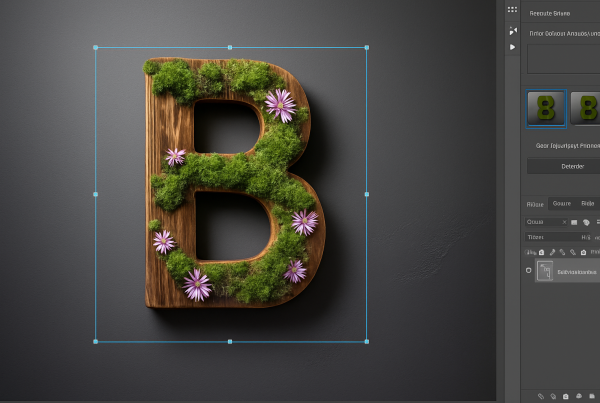

Add Depth and Realism to Your Designs with Easy Reflections
Art goes hand-in-hand with illusion, and few tools offer the magical touch Photoshop does to manipulate reality. One of its most mesmerizing abilities? Creating reflections that bring out the depth and immersive quality of text and objects. Whether you’re starting out on your first Photoshop adventure or you’re seasoned but looking for refresher hacks, creating realistic reflections can add that professional touch you’ve been seeking. Let’s explore this simple yet effective technique to bring your art, typography, and visuals to the next level.
Getting Started: Setting the Scene
Before diving into the illusion of reflections, we need to set the stage correctly. This involves changing the background to a color that aptly contrasts with your text and helps the reflection stand out. In our tutorial, we flip the script from white to black—because who doesn’t love a little drama?
To switch your background to black, if your foreground color is black, simply press Alt + Delete on a Windows machine or Option + Delete on a Mac. This simple command fills your background with the foreground color you have selected.
Typesetting for Impact
Typography styles can make or break your design, so select a font and color that aligns with your vision. For beginners, a standard and widely-loved choice is Arial Regular. After selecting the font, use the type tool to set your desired text onto your canvas. Adjusting the size, placement, and color to your preference is crucial to ensure your text prominently grabs attention.
Once typed out, text positioning magic begins. To reposition your text, simply click the Move Tool and adjust as needed.
The Magic of Duplicate and Transform
Now, for the pièce de résistance—the reflection itself. Start by making a copy of your text using Control or Command + J. This will duplicate your text layer. Then, harness the power of transformation by calling upon the Transform Tool with Control or Command + T.
Next, select “Flip Vertical” under the ‘Transform’ options in the Edit Menu. This flips your text, setting the foundation for that reflection effect we aim to create. Press “Enter” or “Return” to commit your transformation.
Aligning the Marvelous Reflection
Shift-click the reflected text and perfectly place it under your original text. Use the arrow keys for minor adjustments, ensuring there’s a chic gap between your primary text and its reflection to enhance visual appeal.
Apply perfection by creating a layer mask. Use it to fade out the reflection elegantly.
Gradients and Layer Mastery
Select the Gradient Tool and opt for the black-to-white gradient preset. A strategic click-and-drag will help to generate that seamless transition that defines realistic reflections. Hold the Shift key to maintain alignment, dragging from a point approximately three-quarters from your reflected text towards where the original text sits.
In the layers panel, tweak the layer mask’s opacity to about 50%, crafting a subtle yet striking whisper of a reflection.
Blurring for Believability
Finally, defocus the reflection for an added touch of realism. Rasterize your text (Layer > Rasterize > Type) and employ the Blur Tool judiciously. Adjust the tool size to match roughly half of your reflection height to ensure precision and finesse. Smoothly swipe along the base to taper it off, lightly blending your reflection into its background.
Using these techniques yields a transformative visual journey, taking your digital works from flat to fab by introducing reflections that work wonders with both text and objects.
Creating alluring reflections might seem like sorcery, but with the right moves, any Photoshop novice can seem like a seasoned digital magician. Embark on your reflective escapades, and watch your designs echo with added depth and realism.