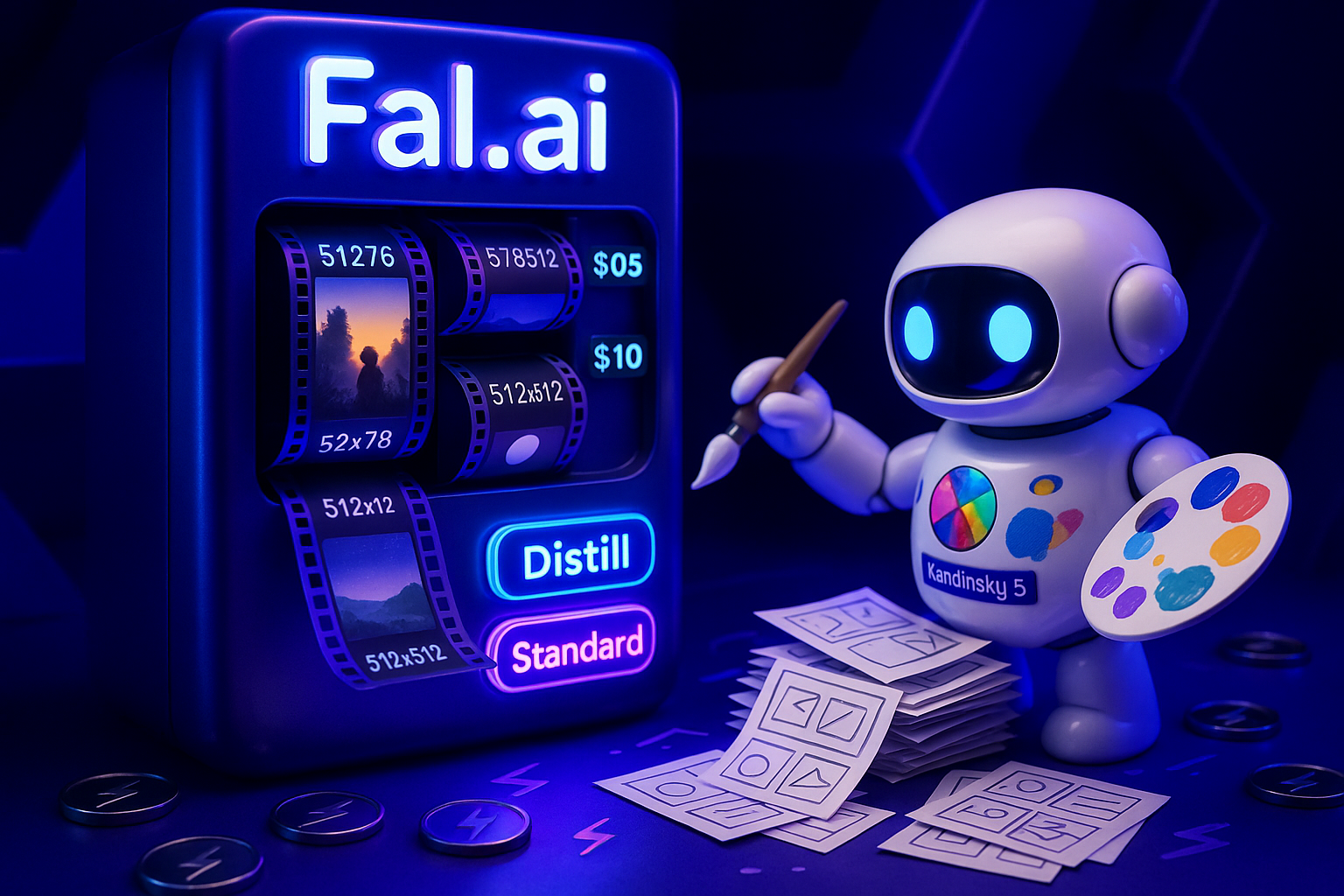
Fal.ai has set a new floor for text-to-video pricing, making Kandinsky-5 accessible at $0.05 for a 5-second clip and $0.10 for a 10-second clip via its Distill model. For creators accustomed to the $0.10-per-second tier associated with frontier systems, this puts short-form AI video into a different economic category altogether.
What shipped
Fal.ai is now hosting two variants of Kandinsky-5 – Distill and Standard – as pay-per-output endpoints designed for five and ten second clips. Distill emphasizes speed and cost; Standard prioritizes moderately higher visual fidelity at still-low rates. Kandinsky-5 itself is published by AI Forever and is documented publicly on GitHub Pages. On Fal.ai, Distill introduces a per-clip price that undercuts prevailing per-second billing across the high end of the market.
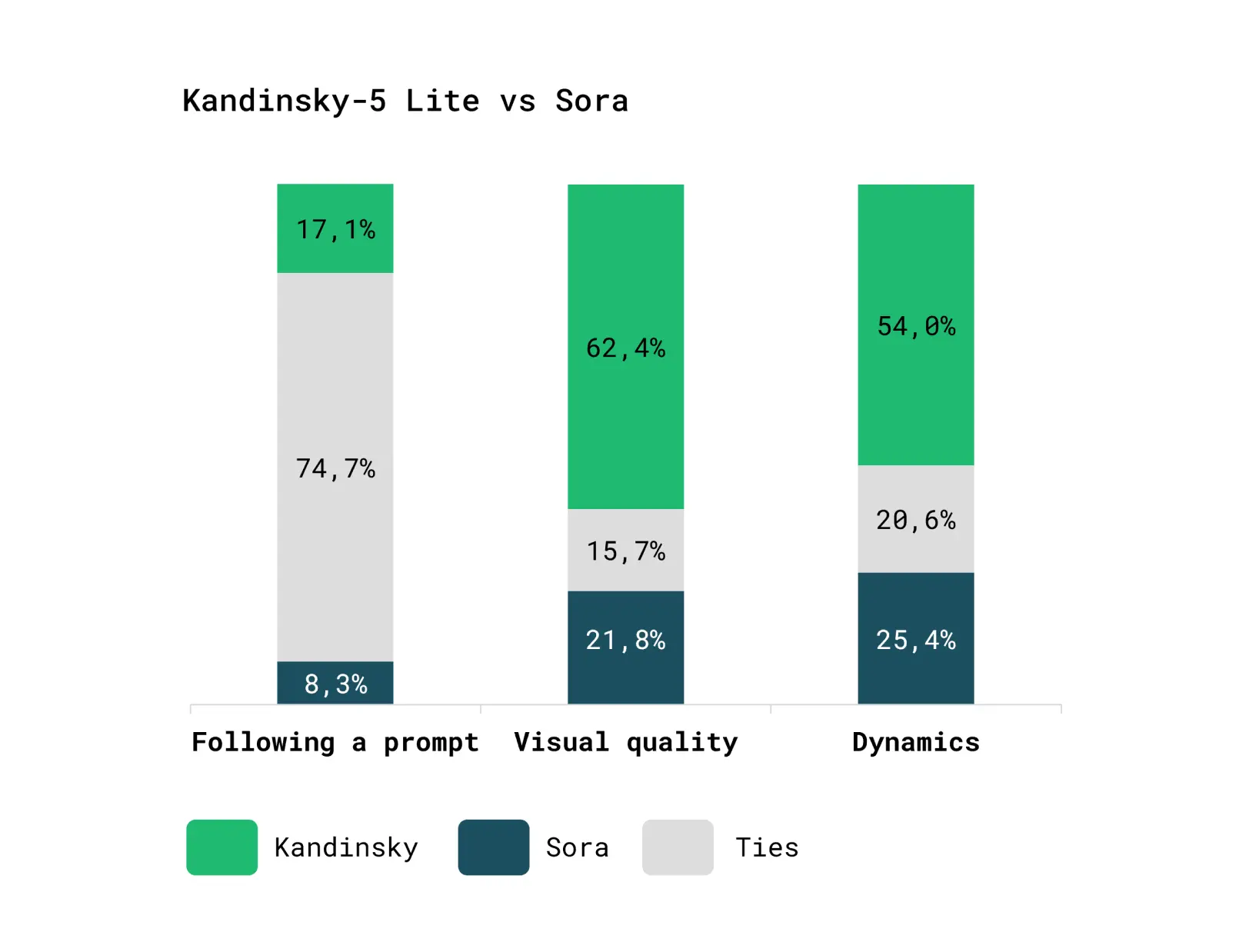
The real breakthrough here is price. On services like Fal.ai you can get a video will cost $0.05 for a 5-second video and $0.10 for a 10-second video. That is unheard of. Compare to Sora 2 at $0.10 per second. The quality is not as good and the resolution tops out at 512×768 (or 768×512) for the distill version.
Why this matters
For visual storytellers, brand builders, and solo entrepreneurs, AI video has often been gated by cost as much as capability. At these rates, iteration scale – the number of shots you can afford to explore – expands dramatically. That shifts where AI video fits in the creative process: not just as a final-output engine, but as an always-on concepting layer for storyboards, motion tests, social drafts, and pitch visuals.
Pricing and specs at a glance
| Model/Service | Clip length | Price | Approx. price per second | Resolution notes |
|---|---|---|---|---|
| Kandinsky-5 Distill (Fal.ai) | 5s / 10s | $0.05 / $0.10 | $0.01/s | Distill caps at 512×768 or 768×512 (also 512×512) |
| Kandinsky-5 Standard (Fal.ai) | 5s / 10s | $0.10 / $0.20 | $0.02/s | Same aspect options; tuned for higher fidelity than Distill |
| Sora 2 (reference) | Varies | n/a | $0.10/s (reference rate) | Frontier-grade quality; used here as a price comparison point |
Model access
- Distill endpoint: Fal.ai
- Standard endpoint: Fal.ai
- Model docs: Kandinsky-5 documentation
Output quality: where it lands
Distill’s headline price comes with calibrated trade-offs that are clear yet useful for many creator workflows:
- Resolution ceiling: Distill tops out at 512×768 or 768×512 (plus 512×512), fitting common portrait and landscape needs for social, storyboards, and animatics.
- Visual fidelity: Expect lower detail than frontier models – especially in faces, textures, and complex physics. The Standard variant on Fal.ai raises fidelity while keeping costs low compared to high-end systems.
- Clip duration: Five or ten seconds per generation keeps iteration fast and budgets predictable.
For campaigns that demand maximal realism or precise physical coherence, frontier tools remain the benchmark. But for exploration and early-stage creative decision-making, this tier is built to let teams try more ideas without second guessing the meter.
Creator impact: budgets, bandwidth, and speed
For non-technical creatives building brands, content calendars, or pitch decks, the real story is that pricing removes a persistent constraint. This update makes it practical to:
- Pressure-test style and story across dozens of clips per concept without bumping into per-second cost anxiety.
- Storyboard motion for vertical and horizontal placements using 512×768 and 768×512 as fast-moving “blocking” passes.
- Prototype social variants for channels where iteration speed beats cinematic polish.
- Allocate spend to where it matters – save the high-end model cycles for final shots and client-facing hero moments.
In short, Kandinsky-5 on Fal.ai reframes short-form AI video as a daily tool for ideation and testing, not an occasional luxury you only use at the end of a project.
Fal.ai’s positioning: pay-per-output and immediate availability
Fal.ai’s model catalog and billing reinforce this shift. Both endpoints – Distill and Standard – are available on demand with pay-per-output pricing and a browser-based playground for quick trials. The approach is specific to creators who want a clear cost envelope from the first shot to the hundredth. That predictability is especially useful for indie producers, educators, and lean marketing teams moving fast under tight constraints.
Two endpoints, two speed-quality profiles
- Kandinsky-5 Distill: the budget accelerator for drafts and motion sketches. Ideal for volume testing and early cuts where the idea matters more than the pixels.
- Kandinsky-5 Standard: a balance step for teams that want a visible quality bump while staying far below frontier pricing bands.
Market context: a new price floor for AI video
The move signals a broader trend: inference costs are falling for short-form video. That matters because it redistributes what creators can try in the middle of a project. Rather than writing prompts once and hoping, teams can now explore style, camera language, and pacing in parallel. For those tracking the high end, see our recent coverage on Sora 2’s availability via Artlist’s creative workspace for additional context on model access and licensing frameworks on Blue Lightning.
What to watch next
- Convergence on quality: As low-cost tiers mature, expect steady gains in motion consistency and texture fidelity at these price points.
- Clip length and controls: Competitive pressure could push configurable durations, camera control, and editing handles into budget tiers.
- Licensing and distribution: For brand teams, integration with asset libraries, audio, and rights management will remain a differentiator around the model core.
Bottom line for creators
The economics of short-form AI video just changed. With Kandinsky-5’s Distill pricing on Fal.ai at $0.01 per second, early-stage motion exploration stops being a hard budget call and becomes a default part of previsualization. If your workflow depends on generating lots of drafts, iterations, or concepts – and you accept today’s limits on realism and resolution – this is a meaningful unlock.