Unleashing Your Inner Superhero with a Creative Emblem
Have you ever wanted to design a powerful superhero-style emblem straight from scratch, but didn’t know where to start? Well, don your creative cape because today, we’re diving into creating a stunning emblem worthy of any comic book hero using Photoshop. Whether you’re an absolute beginner or a seasoned pro, this tutorial breaks down the steps to create a visually-striking emblem with a carbon fiber background. Let’s swoop in and get started on the first part of this two-part series.
Setting the Stage: Creating the Carbon Fiber Background
Before heroics begin, we need to set the stage, or in this case, the background. First, ensure your Photoshop environment is primed with white foreground and black background colors. You can do this by clicking on the small color squares at the bottom of your toolbar until they display black and white, respectively.
Next, create a new document (File > New). Here are the specs you’ll want to use:
– Width: 1550 pixels
– Height: 870 pixels
– Resolution: 150 pixels per inch
– Color Mode: RGB, 8 bits per channel
– Background Contents: Background Color
Once this sleek setting is prepared, make a copy of the background layer by pressing Ctrl + J (or Command + J on Mac).
Guidelines and the Gradient Tool
Visualization is key. Make sure your rulers and Snap to Guides are enabled (View > Rulers and Snap checked). Drag guidelines from the rulers to find the center of your document, providing a guide as precise as a hero sensing danger.
Now, equip your gradient tool, make sure your Radial Gradient icon is active, and select the default black and white gradient. Set the first gradient stop to 50% gray to provide depth, and add the gradient by dragging while holding Shift, ensuring a straight path.
This will call for applying a Filter Gallery effect (Filter > Filter Gallery > Distort Folder > Glass), where you’ll set:
– Texture: Tiny Lens
– Distortion: 20
– Smoothness: 1
– Scaling: 50%
This creates the carbon fiber-esque effect—the unsung hero behind many design textures.
Designing the Emblem’s Template
With the background nailed down, it’s time to shape your emblem. Grab the Pen Tool, select Path, and draw with confidence—like a character wielding a well-known logo.
1. Start Drawing Paths
Click around your guidelines to create sharp, superhero-worthy corners and angles.
2. Create a Selection
Right-click the path and choose “Make Selection” with Feather Radius at 0 pixels, then fill with black.
3. Mirror and Unite
Duplicate your shape, flip it horizontally, and use the Move Tool (with Shift) to align it centrally.
Your canvas is coming together with dramatic flair!
Emblem Detailing: Inner Glow and Stroke
Open Layer Styles (double-click the shape layer) and apply an Inner Glow:
– Blend Mode: Normal
– Opacity: 100%
– Choke: 100%
– Size: 45 pixels
Also, add a Stroke:
– Size: 12 pixels
– Position: Inside
This gives your emblem dimension, like a symbol forged in creative fire.
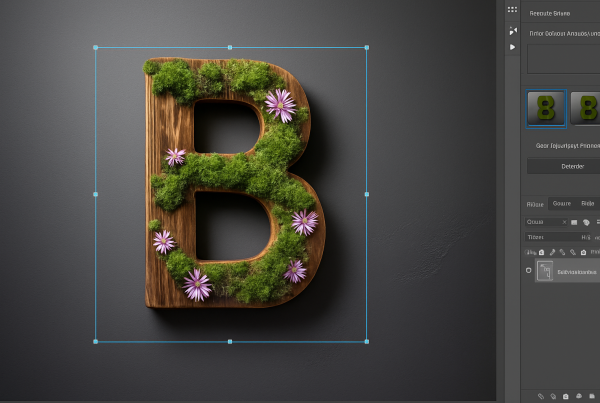
Typography: Crafting the Hero’s Initial
No superhero emblem is complete without a bold letter. Use the Horizontal Type Tool with a heavy font like “Kilogram Regular” (downloadable upon your discretion).
– Font Settings: 100 pt size, Center aligned, White color.
– Character Editing: Adjust with the Transform Tool (press Ctrl + T) to position your character gracefully within its new home.
Final Touch: Masking and Layer Management
Using a Layer Mask, you can hide portions of your text that stretch beyond the emblem’s borders. Employ the Rectangular Marquee Tool and paint over excess areas with the Pencil Tool.
Conclusion: A New Dawn for Iconic Designs
Part One of our journey concludes here. You’ve successfully crafted a dynamic background and initial template of an emblem. Part Two awaits to add the finishing touches—colors, textures, and that superhero depth!
Remember, every creative endeavor harbors its own origin story. What’s yours?