From Parked to Thunderbolt: Creating Motion in Static Images
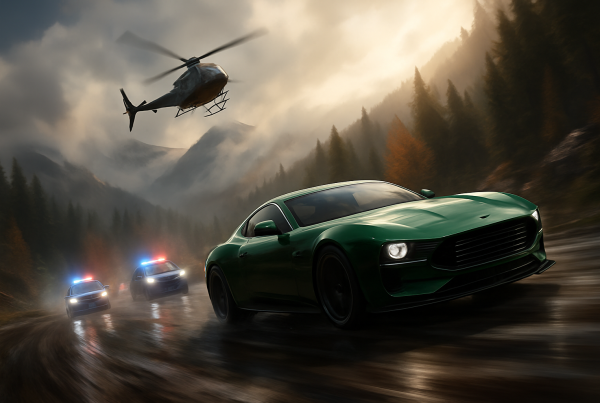
If you've ever wondered how to transform an image of a parked car into one that appears to be zooming down an open road with exhilarating speed, you've come to the right place. In this Photoshop tutorial, we're going to take you on a ride, turning a stationary vehicle into a speeding marvel. Whether you're a Photoshop enthusiast or a curious beginner, this effect will amuse and captivate both your creative spirit and your audience.
The Key Ingredients: A Compelling Car and Scene
The trick here lies in the selection of the right images. Our recipe starts with a document sized at 1280×720 pixels at 72 pixels per inch resolution. This ensures the final graphic doesn't skimp on quality when you start angling it for effect.
Choose Wisely:
- Opt for a photo of an open road, ideally shot from a low vantage point. The scene should then be cropped so the vanishing point is centered within your document, enhancing the feel of speed.
- Select a car image taken from the same vantage point to maintain consistency.
Cutting Out and Incorporating the Car
To successfully transport your car into this road scene, you'll first need to skillfully cut it out from its own background.
The Selection Process:
- Use your preferred method for cutting out the car. In the video, the Pen Tool is utilized to trace the car's shape meticulously.
- Once you've created a closed path, right-click to make a selection with feathering of 0.5 pixels.
- Press
Ctrl/Command + Jto cut the car out and place it on its own layer.
Now, you can bring your car image into the road scene. Select the car layer, copy it, and paste it into your desired street scene.
Resizing, Repositioning, and Adding Shadows
With your car seamlessly integrated into its new environment, it's time to resize and reposition it to make the scene more convincing.
Transform Tool Magic:
- Call up the Transform Tool using
Ctrl/Command + T. - Drag to adjust size from the anchor point while keeping proportions intact using
Shift + Alt/Option.
To ground the car visually, painting in shadows can create a more lifelike effect.
Crafting the Shadow:
- Select the street layer and use the Brush Tool set to Linear Burn mode at 25-30% opacity.
- Paint a subtle shadow beneath the car, especially under the grill area.
- A radial blur from Filter > Blur > Radial Blur can add to the realism.
Enhancing Speed with Blur and Layer Masks
Speed and blur go hand in hand. With a few Photoshop tricks, you'll create an illusion of motion that dazzles.
Radial Blur Effect:
- Duplicate your car layer and apply a radial blur set to 25.
- Add a layer mask and use a brush to keep the car edges sharp while the interior stays blurred.
Giving the Scene a Sense of Movement
Now, for the pièce de résistance: angling the entire composite to add dynamism.
Add the Thrill:
- Link all scene layers and activate the Transform Tool.
- Adjust the entire image’s angle to infuse it with a sense of kinetic energy.
Adding a Driver (Optional)
Want to add a human touch? Open Photoshop and place a driver into the car to ensure it doesn’t look like it’s on autopilot.
By the end of this tutorial, you'll have transformed a static image into an exhilarating spectacle of speed. This technique not only adds life to otherwise stationary images but also enhances narratives, making them more engaging.
As always, have fun with Photoshop and push your creative boundaries. Experimentation is the key to discovering new ways to bring life to your work. With practice, you'll master the illusion of speed in no time!