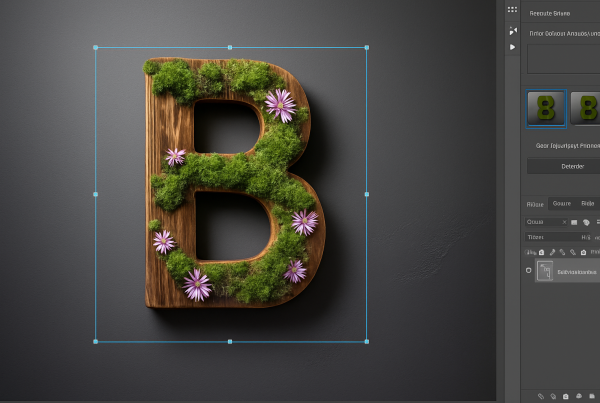

No Longer Overlooked—Photoshop Tips You Need to Know
Photoshop, the darling of digital artists, offers an overwhelming number of tools and features to manipulate images. For those of you just dipping your toes into this expansive sea, we’re spotlighting a few underrated tools that can make a big difference in your edits. Whether it’s brightening dark areas without washing out the highlights, correcting keystone distortion, or saving images with transparent backgrounds, these tricks can improve your Photoshop skills tenfold.
Brightening Your Images Without Overdoing It
We’ve all been there. You take a photo, and it doesn’t quite capture what your eyes see. More often than not, the dark areas are too shadowy, and the light areas are too blinding. Fear not! Photoshop’s Shadows/Highlights adjustment panel is here to help.
Simply create a duplicate of your photo to compare results. Use Ctrl+J on Windows or Command+J on a Mac. Go to Image > Adjustments > Shadows/Highlights. The panel allows you to adjust shadows and highlights separately using sliders or percentage values. The best part? It updates in real-time if you have the preview box checked.
This function enhances the details significantly, and the best part is, you don’t have to worry about turning your bright skies into flat, dull expanses.
Straighten Up with Perspective Crop
How many times have you snapped a photo only to realize that some architectural elements have turned out awkwardly skewed? Enter the Perspective Crop Tool. This handy tool corrects keystone distortion, the phenomenon where buildings appear to lean backward or forwards in photos.
For those operating on Photoshop CS6 or later, access your Perspective Crop Tool. A simple drag of the rectangle over your desired area allows you to realign corners and crop your image seamlessly. If you’re still hanging with CS5, check the “Perspective” box within the Crop Tool to get a similar effect.
Straight lines are now in your reach—literally.
Saving Images with Transparent Backgrounds
So, you’ve got an awesome logo, and the last thing you want is a clunky white box encasing it wherever it’s used. Transparency saves the day, allowing your design to seamlessly transition onto any background.
To save an image without its backdrop, deactivate any unwanted effects in the layers panel. Hide the background layer and head to Image > Trim. It’s time for the precision step! Choose any option for trimming (oddly, it doesn’t matter much) and apply it to your edge. Importantly, remember to save your image as a PNG file, the loyal workhorse for retaining transparency.
Adjust compression to “None,” and you’ve got an image with every transparency intact, ready for web or print as needed.
PNG vs. JPEG: The Battle of Image Formats
While JPEG might still win the popularity contest, PNG files are your ally in professional and polished designs. Here is why you might choose PNG over JPEG in specific situations:
- Transparency: Unlike JPEGs, PNG can handle transparency, something critical for logos and web designs.
- Quality: PNG is lossless, whereas JPEG compresses to save space, often compromising quality.
- Interlacing: PNG supports progressive load, useful for slow connections (though it does increase file size).
Though both formats have their place, understanding when to use each elevates your content significantly.
Exploring New Horizons in Photoshop
Explore beyond your comfort zone with Photoshop’s rich toolkit. Each tip and trick enhances your images, bringing them closer to your envisioned output, whether that’s a touch of realism or surreal fantasy.
Practice these techniques, and as you refine your craft, you might just be surprised by the artist evolving right within Photoshop’s infinite layers and adjustments.
Happy editing, creators! The Photoshop world is vast, and each new trick is just another pixel in the masterpiece you’re undoubtedly making.