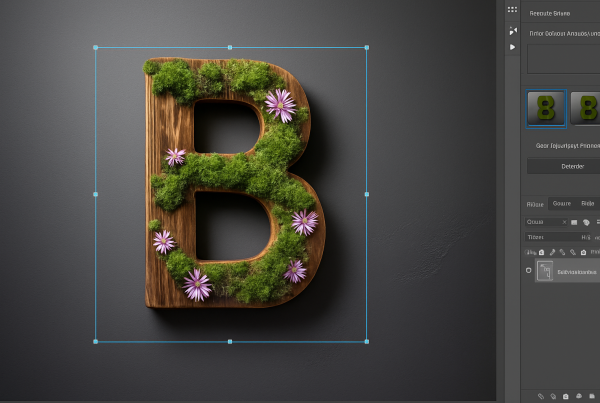

Create the Perfect Embossed Paper Effect for Text, Logos, and Graphics
Embossed paper is not just a tactile pleasure—it’s a feast for the eyes when done right. The art of embossing can elevate your design, adding richness and depth. You don’t even need a physical embossing machine and special paper anymore; you can achieve this classic effect digitally using Adobe Photoshop. Whether you’re a budding graphic designer, a small business owner creating your branding, or just someone seeking creative fulfillment, embossing can be a valuable tool in your design arsenal.
But before we dive into pixel wizardry, let’s take a look at a detailed guide, amplified by a little visual aid from our most recent video tutorial.
High Contrast Art: The Foundation of Embossing
The essence of digital embossing lies in its foundation—an image with strong contrasts, primarily black and white. We found ours on Shutterstock, but the internet is your oyster for sourcing high-contrast images or you can create your own. The key is to have stark differences in tone to make the ‘raised’ sections pop.
Set Up Your Workspace
1. Prep Your Canvas: Our canvas, sized like a crisp 4K movie at 3840×2160 pixels and 72 pixels/inch resolution, comes ready to frame your artwork beautifully. Use the usual RGB and 8-bit channels.
2. Color Adjustments: Make sure your sworn partner—black and white—is set as your foreground and background colors. Just hit D on your keyboard to reset if you stray from the path.
3. Pattern-Based Magic: Applying a pattern to your background involves sprinkling a little texture on it. Save your papers—this one’s digital. Simply head over to Edit > Define Pattern to lock in the magic. Use this pattern for the watercolor paper texture we provided in the project’s files.
Adding Depth with Gradients
Playing with gradients can add shadows and highlight effects to mimic realistic light play on embossed surfaces:
- Open the Gradient Editor from the Adjustment Layer.
- Pick ‘Foreground to Transparent’ for a subtle shift.
- Set the Style to ‘Linear’, Angle to 0 degrees, and Scale to 100%.
- Adjust how it burns with the ‘Linear Burn’ mode and set its transparency at a nudging 5%.
Each adjustment might seem imperceptible on its own, but collectively they sketch a vivid tableau.
Bring Your Black and White Graphics to Life
For this section, you likely have some graphics you can open or create in Photoshop:
1. Convert any grayscale image to pure black and white via Image > Adjustments > Threshold.
2. Untangle your graphic from its background like a deft magician with layers and set it free using the Channels Panel.
3. Use the Move Tool to gently place your now-vibrant image onto your patterned paper.
Embellishing with Bevels and Shadows
Here’s where Photoshop mimics depth perception like a master illusionist:
- Bevel & Emboss: Apply these layer styles directly to your graphic folder to influence all contents without exception.
- Add a Color Overlay: This fills the main areas with harmonious tones, perfectly matched to your paper using the ‘101 by 101 Average’ sample.
- Shadow Play: Subtle shadows give the graphic weight and a sense of place. Using Multi-Drop Shadows with varied settings may seem indulgent but enhances realism.
Closing Thoughts: Unleash the Creativity!
There’s something profoundly artistic about the embossed paper effect—it takes ordinary graphics and makes them tangible ink on paper, rich with shadow and light. The beauty of Photoshop is harnessing powerful tools to produce professional-quality textures without ever stepping away from your computer. From digital logos to illustrative text, the power is in your virtual hands, and your creativity is the only limit.
So go forth and emboss with the confidence of a true artisan, knowing that every project just became a little bit more bespoked up.