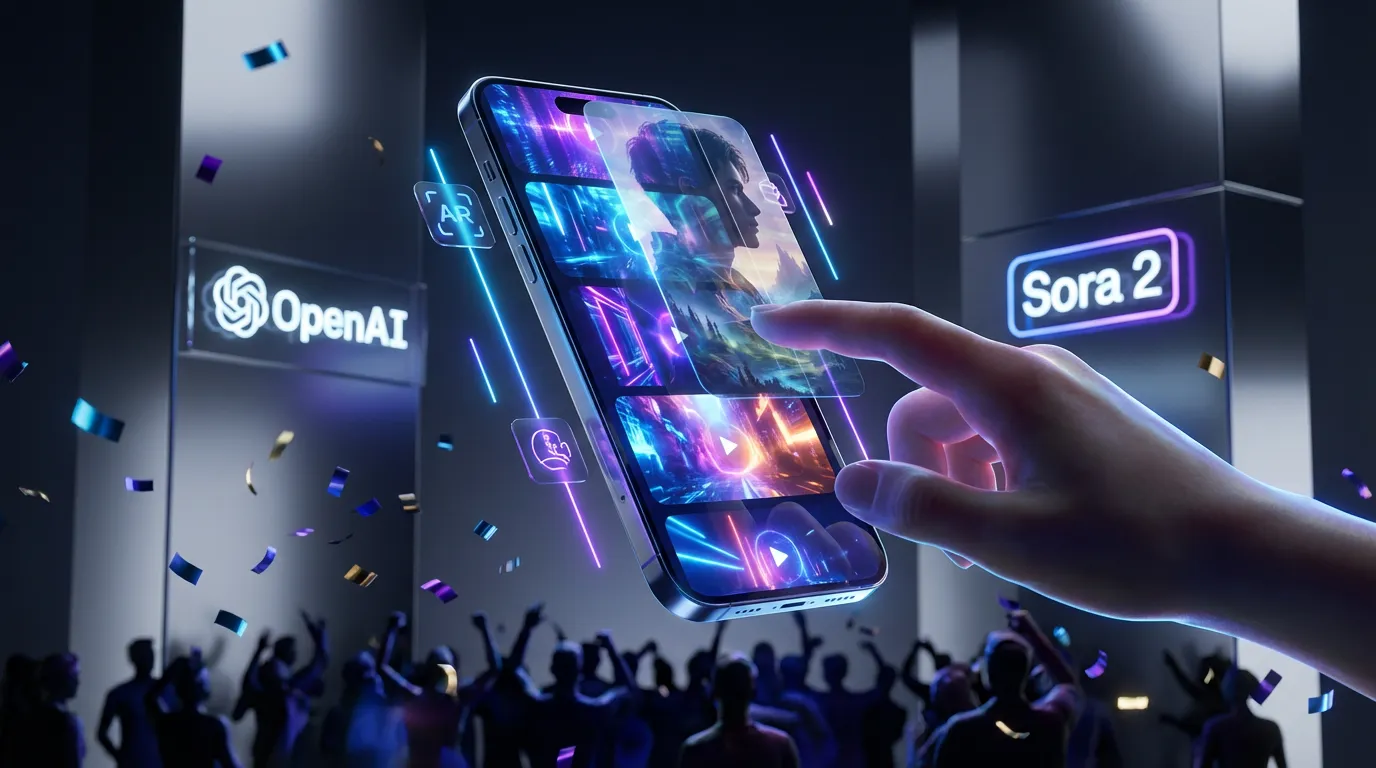
Sora 2 is not just a better text to video model. It is OpenAI packaging generative video like social media: a swipeable discovery feed, one tap remixing, and identity features that let you cast yourself or approved friends as characters in generated scenes. For creators and marketers, that combo matters more than another round of look, it is cinematic. It is about speed, iteration, and distribution mechanics living inside the same product.
OpenAI’s official product page is the cleanest starting point: https://openai.com/index/sora-2/.
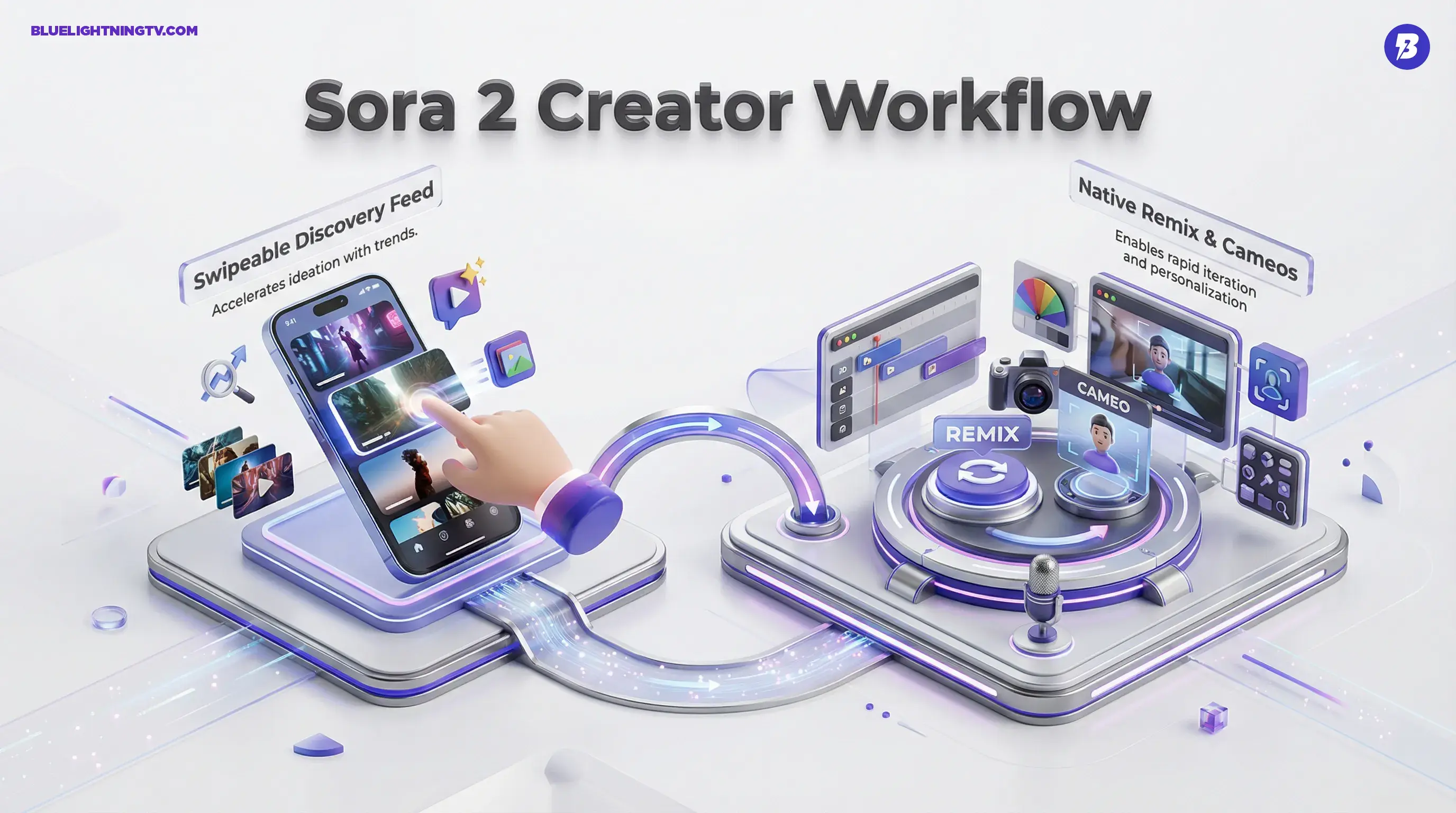
What’s new here is the shift in product shape. A lot of gen video tools are render engines with a UI. Sora 2 is trying to be a studio plus a content loop, where discovery feeds creation, and creation feeds discovery.
The big shift: product, not demo
Sora’s earlier narrative was mostly model centric: realism, physics, continuity, wow. This update leans into workflow, which is where creators actually live. The result is a tool that’s less about generating one impressive clip and more about generating many usable options quickly, especially in the formats and rhythms short form platforms reward.
If Sora 1 felt like an R and D flex, Sora 2 feels like OpenAI picking a fight for the creator’s home screen.
And that matters because the winners in creator tooling rarely win on best model. They win on repeatability and time to post.
What Sora 2 shipped
Sora 2 now blends three ideas into one experience:
- A swipeable discovery feed
- Native remix as a first class action
- Consent based identity casting for self insert
Layered on top: tighter access controls, verification, and plan gating that signals OpenAI is aiming for production grade usage, not anonymous drive bys.
For OpenAI’s broader Sora rollout context, including access tied to subscriptions, see: https://openai.com/blog/sora-is-here/
The swipeable feed
Sora 2’s feed borrows the most addictive UI pattern of the last decade: vertical swipe discovery. It is not a small UX choice. It is a product thesis.
In practice, this changes creator behavior:
- You do not start with a blank prompt box.
- You start with examples, then mutate them.
- The app becomes a trend engine you can immediately convert into output.
That’s important for marketers because modern creative is not one perfect spot. It is many variations, with hooks tuned to micro audiences.
Discovery becomes direction
A feed is a creative brief generator in disguise. It surfaces:
- pacing that performs
- lighting and style trends
- memeable scenarios
- emergent formats
The pragmatic upside: faster ideation. The tradeoff: you will need taste, because the feed will happily serve you endless variations of the same idea.
Remix is the default
Remix is the feature that makes the feed operational. Without it, the feed is just entertainment. With it, the feed becomes a production accelerator.
Sora’s help center overview of the app experience is here: https://help.openai.com/en/articles/12456897-getting-started-with-the-sora-app
Remixing means you can take an existing clip and quickly iterate on:
- prompt details (subject, setting, action)
- style and tone
- duration and pacing choices (where available)
- format variants intended for different platforms
This is the same logic that made templates explode in design tools: start close to good and iterate.
Why remixing matters for teams
Marketers and studios do not want one output. They want:
- 10 hooks
- 5 intros
- 6 endings
- 3 product angles
- 2 creator personas
Remix first creation supports that reality better than type a prompt, hope it is perfect.
Cameos: self insert, with consent
The identity casting feature lets you cast yourself or approved friends as a character in generated scenes. The flashy headline is fun, but the business implication is simpler:
Cameos turn Sora 2 into a personalization engine.
Think:
- a founder appears in multiple story worlds without reshooting
- a creator drops into branded scenarios at volume
- an agency tests human led variants without a full production day
And the important part for real workflows: the controls and permissions are built into the product flow, not bolted on later.
Access is more gated now
Sora 2’s direction is clear: less open playground, more paid tool. Access is tied to ChatGPT subscription tiers and availability, with usage limits varying by plan.
If you need a practical creator oriented breakdown of what OpenAI has been shipping around Sora 2 recently, this COEY post is a good companion read: Sora 2 Adds Sound to AI Video Creation
Here is a snapshot of how the product shape affects creator decisions:
| Decision point | What Sora 2 does | What it means |
|---|---|---|
| Ideation | Feed first discovery | Faster concepts, more trend pull |
| Iteration | Remix from any clip | More variants per hour |
| Personalization | Consent based identity casting | Human feeling ads without reshoots |
Verification tightens the loop
As capabilities grow, especially identity casting, more friction shows up at the door. OpenAI’s documentation describes phone verification via SMS.
This is a double edged move:
- Good for brands: fewer throwaway accounts, less spammy misuse, more confidence experimenting inside a controlled system.
- Annoying for ops: more onboarding steps for team members, clients, or contractor workflows.
But the broader signal is product maturity: OpenAI is treating Sora 2 less like a toy and more like infrastructure that needs guardrails.
What this changes for creators
Sora 2’s most important impact is not that it can generate prettier clips. It is that it compresses the loop:
- watch → remix → publish
- test → iterate → ship again
That loop is basically the content economy’s engine. Tools that speed it up without turning outputs into unusable artifacts earn real adoption.
Where Sora 2 fits best
Sora 2 is particularly aligned with:
- short form marketing teams that live on A and B testing
- creator led brands that need volume with a consistent vibe
- agencies pitching concepts rapidly before committing to production
It is less obviously ideal for longform, high control filmmaking pipelines where teams need deterministic outputs, versioned assets, and deep editability.
Limitations to keep in mind
Even with the social native packaging, creators should stay grounded about what the tool does today:
- Brand precision is still fragile. Logos, product details, and exact typography are historically where generative systems get weird.
- Consistency is not free. You will still burn generations chasing the same character across multiple clips.
- Platform native does not mean platform ready. Teams still need workflows for approvals, exports, captions, and compliance.
Sora 2 is fast. It is not magic. You still need a human eye before anything ships.
The competitive context
Sora 2’s social first turn lands in a market where video generators are converging on the same creator demands: vertical formats, better motion, fewer artifacts, faster iteration. Sora 2’s feed plus remix strategy is OpenAI’s sharpest differentiation right now: distribution mechanics inside the tool.
For more context on how the wider AI video market is moving, here is another relevant COEY post: Veo 3.1 finally supports vertical video
What to watch next
If Sora 2 keeps evolving in this direction, the biggest signals will not be more realism. They will be product levers:
- more precise controls for iteration
- better identity persistence for series content
- cleaner team workflows (shared libraries, brand kits, role controls)
- export and handoff improvements for real pipelines
Sora 2’s headline is fun, TikTok vibes for AI video, but the underlying move is serious: OpenAI is building a system where creation and consumption fuel each other, and where marketers can turn trend gravity into deliverables with fewer steps.