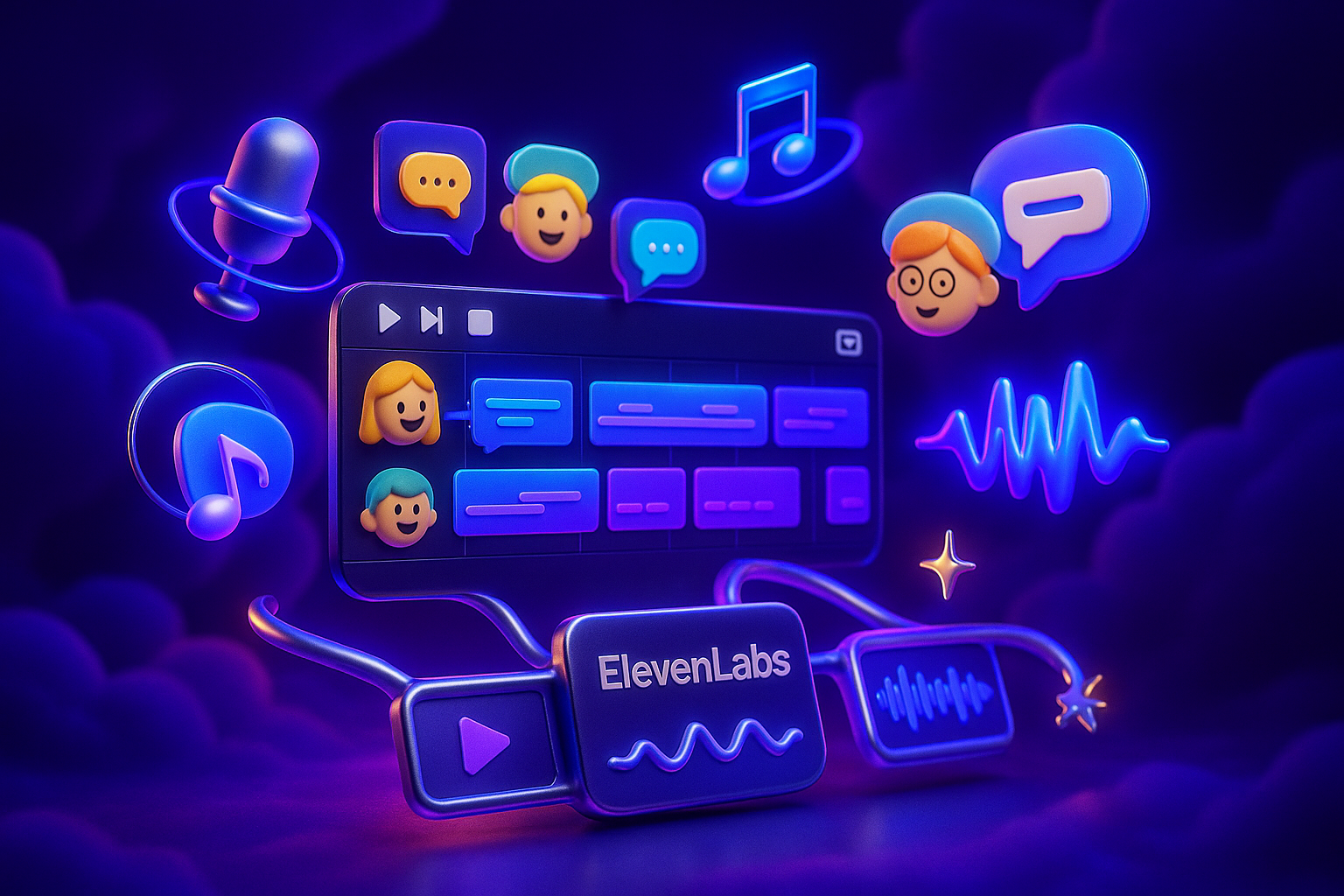
ElevenLabs has released Studio 3.0, a browser-based editor that consolidates AI-powered workflows for audiobooks, podcasts, and video, bringing advanced voice, music, sound effect, captioning, and collaboration tools together in one timeline. The update positions Studio as a single environment for going from idea to finished media with fewer apps and fewer re-recordings. Details and feature highlights are available on the official product page here.

One Editor for Audio, Video, Voice, and Music
Studio 3.0 centers on a unified timeline that now spans both audio and video projects. ElevenLabs integrates its flagship AI audio models directly into the editor, aiming to simplify how creators assemble narration, score, and sound design:
- Expressive Voiceovers for lifelike narration, dialogue, and character voices, with control over emotion and style.
- Eleven Music for custom soundtracks and mood-matched scoring that syncs with scenes.
- AI Sound Effects to generate ambience and cues from text prompts.
- Voice Isolation to reduce room noise and echo for clearer speech.
- Voice Changer for tonal shifts and character performance.
Video creators can upload footage, layer AI-generated narration, add music and sound effects, and enable captions, all on the same timeline, with non-destructive editing across tracks.
Automatic Captioning and Multilingual Reach
Studio 3.0 introduces automatic captioning for both audio and video, with on-timeline editing and styling. Multilingual voices and subtitles support broader distribution and accessibility, allowing creators and brands to localize content without separate tools.
Speech Correction Aims to Eliminate Re-Recording
A notable workflow addition is Speech Correction, designed for real-world production. When a spoken line is added, Studio generates a transcript on the timeline. Edits to the text prompt the system to regenerate the line in the creator’s own voice, reflecting the original tone and pacing. The goal: correct stumbles, tighten phrasing, or update wording without scheduling another mic session.
Studio 3.0’s text-first approach to audio means script and performance stay in sync, even when plans change late in the process.
Time-Stamped Collaboration for Approvals
Collaboration tools include shareable project links that collect time-stamped comments directly on the timeline. For agencies, production studios, and independent creators working with clients, the feature centralizes review cycles and reduces guesswork during edits. Comments live in context with the exact moment under discussion, creating a trackable approval path.
Script Generation Inside the Timeline
Studio 3.0 adds an AI Script Generator for voiceovers, stories, and episode outlines. The generator is intended to accelerate ideation, give creators a starting point for drafts, and keep script changes tethered to performance and timing decisions on the same canvas.
What’s New in 3.0: Feature Snapshot
| Capability | What’s New in 3.0 | Why It Matters for Creators |
|---|---|---|
| Unified Editor | Single timeline for audiobooks, podcasts, and videos | Fewer exports and round-trips; keep momentum from draft to final |
| Speech Correction | Edit text to regenerate lines in your own voice | Fix flubs without re-recording; consistent tone across pickups |
| Automatic Captioning | On-timeline captions with styling and multilingual support | Accessibility and reach without separate subtitling tools |
| Collaboration | Shareable feedback links with time-stamped comments | Clear review cycles and faster approvals for clients and teams |
| Voice + Music + SFX | Expressive voiceovers, Eleven Music, AI SFX in one place | Soundtrack and sound design aligned to narrative pacing |
| Video Support | Upload footage, layer audio, caption, and export | Finish entire edits without handing off to another app |
Context: Broader Model Upgrades and Creative Control
Studio 3.0 arrives alongside broader model improvements in ElevenLabs’ stack. The company’s Eleven v3 text-to-speech model emphasizes higher expressiveness and broad language coverage, part of a push toward more controllable, production-quality voices across use cases like film, games, audiobooks, and accessibility. Details on the model direction are outlined in ElevenLabs’ announcement here.
For creators, the direction is consistent: stronger emotional range, better pacing control, and more natural line reads that blend with music and SFX. Studio also continues to feature creator-facing controls, such as performance parameters and tools like voice isolation, designed to rescue imperfect recordings and preserve the intended character of a read without technical detours.
Availability and Access
Studio is accessible in the browser and available broadly, with free and paid tiers. According to ElevenLabs, free users can create, edit, and export a limited number of projects, while paid plans expand usage and collaboration capacity. The company detailed broader availability in an update here. Studio 3.0 features, spanning video support, voice cloning, automatic captioning, and time-stamped feedback, are positioned as part of a single workflow aimed at individual creators and teams.
Market Signal
The launch lands amid a period of rapid growth for ElevenLabs. In January 2025, the company raised funding at a $3.3 billion valuation, signaling investor conviction in AI-first media tools for production. By September 2025, a secondary share sale reportedly valued the company at $6.6 billion, reflecting escalating demand and competition in the generative media space. Coverage: Reuters (Jan 30, 2025) and Reuters (Sept 8, 2025).
For creators, those milestones underscore a broader trend: AI-native production tools are consolidating into fewer, faster environments. Studio 3.0’s bet is that voice, music, and timeline editing can live together without sacrificing quality or control.
Takeaway for Creators
Studio 3.0 consolidates key media workflows, including expressive voiceovers, original music, AI sound effects, captioning, and collaborative review, into a single browser editor. The text-first approach to fixing takes, plus time-stamped feedback, is aimed squarely at speeding up production while keeping creative control in the timeline. For audiobook producers, podcasters, YouTubers, and agencies working across languages, the proposition is a faster path from concept to publish-ready media.