

xAI Launches Grok Code Fast 1 for High-Speed Agentic Coding
xAI has introduced Grok Code Fast 1, a specialized model built to power low-latency, low-cost “agentic” coding, meaning AI-driven development loops that plan, call tools, write code, run tests, and apply fixes in rapid succession. The company is positioning the release as a pragmatic upgrade for teams who need blisteringly fast response times during multi-step code workflows, rather than a general-purpose chatbot. The announcement arrives as xAI intensifies its push into developer tools and coding assistants, with early access available across popular editors and platforms. Reuters reports the model is aimed squarely at speeding up autonomous coding tasks and making agent loops economically sustainable.
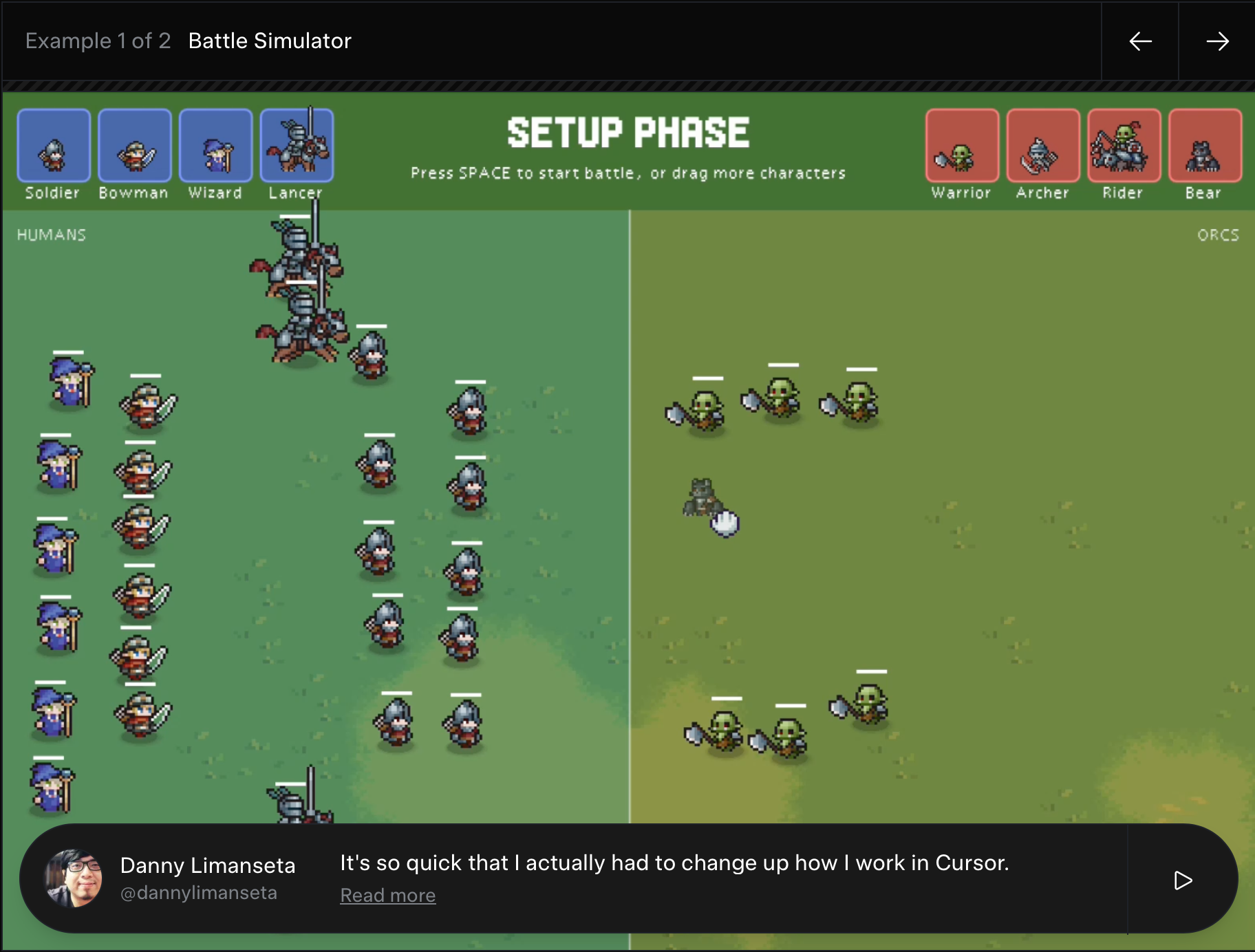
What Grok Code Fast 1 Is
Grok Code Fast 1 is a purpose-built model optimized for agentic coding, tuned for the kinds of multi-call loops that modern code agents rely on: generating and revising code, traversing repositories, calling external tools, running tests, and applying targeted fixes. Rather than aiming for broad conversational depth, xAI says this model focuses on serving speed and throughput in developer environments where every second of latency compounds across dozens or hundreds of steps.
Optimized for agentic coding tasks, xAI frames the release around delivering fast multi-step plans and tool calls inside real-world software workflows.
What’s New and Notable
The headline is responsiveness. According to xAI, Grok Code Fast 1 is engineered to deliver sub-second responses on tool-heavy loops, reducing the stutter that slows agents when they’re planning, linting, compiling, running unit checks, and iterating repeatedly. That speed focus extends to serving infrastructure as well, and xAI credits work by its inference and supercomputing teams for cutting end-to-end latency so agents can stay in flow.
Instead of publishing a slate of formal benchmarks, xAI emphasizes practical developer experience, including faster token serving under iterative load and lower cost per loop, over leaderboard scores. That positioning suggests the model’s value is in the rhythm of everyday engineering: short, precise cycles that amplify productivity when the wait time is near zero.
Key Capabilities
- Agentic coding performance: Tuned for rapid, multi-call tool loops that automate plan-code-test-fix cycles.
- Wide language coverage: Supports TypeScript, Python, Java, Rust, C++, and Go for common modern stacks.
- Repository-aware operations: Built to answer codebase questions, draft new modules, and propose precise bug fixes quickly.
- Low-latency serving: Sub-second responses in typical loops, minimizing context switching for developers and agents.
At-a-Glance: Grok Code Fast 1
| Area | Detail |
|---|---|
| Model Focus | Agentic coding with rapid, tool-heavy iteration |
| Supported Languages | TypeScript, Python, Java, Rust, C++, Go |
| Serving Emphasis | Sub-second responses for multi-step plans and tool calls |
| Primary Use Cases | New project scaffolding, codebase Q&A, targeted bug fixes |
| Availability | Free for a limited time via select IDE and agent platforms; API access from xAI |
Performance, Pricing, and Access
The value proposition combines speed with aggressive per-token pricing designed to make continuous agent loops affordable. xAI highlights introductory rates at $0.20 per million input tokens, $1.50 per million output tokens, and $0.02 per million cached input tokens, pricing aimed at enabling high-volume automation without runaway bills during long development days. Coverage of the launch notes these rates as part of xAI’s push to undercut typical costs for code-intensive workloads while pushing responsiveness to the foreground. See further reporting on pricing and launch context via Investing.com.
| Pricing (USD) | Rate per 1M tokens |
|---|---|
| Input | $0.20 |
| Output | $1.50 |
| Cached Input | $0.02 |
For teams looking to evaluate the model directly, xAI notes it’s “free for a limited time” across several partner integrations in code assistants and IDEs. Developers can also access the model via the xAI API to wire it into existing build systems and internal agents. For API onboarding and developer setup, refer to xAI’s documentation hub: xAI Docs.
Where You’ll Find It
xAI says Grok Code Fast 1 is rolling out through well-known editor and agent ecosystems, including GitHub Copilot, Cursor, Cline, Roo Code, Kilo Code, opencode, and Windsurf. The intent is straightforward: give teams a fast path to testing low-latency agent loops in the tools they already use, with minimal friction to compare turnaround times against their current assistants.
Implications for Developers and Creative Teams
The immediate audience here is professional software teams and toolmakers who run agentic workflows at scale, where shaving seconds off each plan-call-fix cycle compounds across hundreds of calls. But the launch also carries implications for creators who build products, brands, or media with code under the hood. For startups, solo entrepreneurs, and marketing teams that increasingly depend on lightweight engineering to automate content flows or prototype interactive campaigns, faster agents translate into faster iteration without ballooning cost per experiment.
For visual designers and videographers using AI-enabled plugins and pipelines, agent speed determines how “real-time” those assistants feel when they’re stitching timelines, renaming assets, tapping APIs, or generating custom scripts to clean up repetitive tasks. In brand work and content operations, low-latency code agents can help keep publishing cycles nimble, drafting project scaffolds for microsites, automating analytics hooks, and refining small utilities that move creative projects forward without waiting on a heavy, general-purpose model to grind through each step.
The strategic shift: speed and affordability measured at the loop level, not just single prompts, so assistants can handle many small tasks in sequence without breaking creative flow.
Context: A Model Built for the Pace of Modern Engineering
Grok Code Fast 1 arrives as the market for code assistants and AI-powered agents quickly diversifies. In this phase, differentiation often looks less like a single, splashy benchmark and more like a reshaping of user experience, reducing latency in tool chains, smoothing integration with editors, and controlling costs when assistants make dozens of calls behind the scenes. Reporting on the release by Reuters situates xAI’s move in a broader push toward autonomous coding tools that can keep pace with production needs across startups and enterprises alike.
Availability and Rollout
xAI says Grok Code Fast 1 is available now via select partners with free access for a limited time, making it straightforward for teams to trial responsiveness and cost profiles in live projects. The API route gives developers a direct path to plug the model into agent frameworks, batch pipelines, and custom internal tools, key for teams that want to measure time-to-fix and time-to-ship against their current stacks. Documentation for the API and SDKs is available through xAI’s developer site at xAI Docs.
Bottom Line
Grok Code Fast 1 stakes out a clear position in the Grok family: a speed- and cost-optimized model focused on the realities of agentic development. The emphasis on sub-second interactions, practical token economics, and broad availability across popular tools signals a bid to set a new baseline for code assistants that need to plan, call tools, and fix quickly, again and again. For developers, that’s an opportunity to compress iteration loops and ship faster. For creators and brand builders, it’s a chance to keep momentum across code-adjacent workflows, from campaign prototypes to automation scripts, without paying a latency tax that breaks creative flow.
As xAI leans into agentic coding, the question becomes how quickly teams adopt loop-level performance metrics, measuring not just accuracy, but how many decisions and fixes an assistant can move through in a minute. Grok Code Fast 1 is xAI’s answer: a specialized model pitched at the tempo of modern software work, with pricing intended to make that tempo sustainable at scale.