Microsoft debuts MAI-Voice-1 for expressive speech and MAI-1-preview for general text generation, both now available in preview for developers
Summary
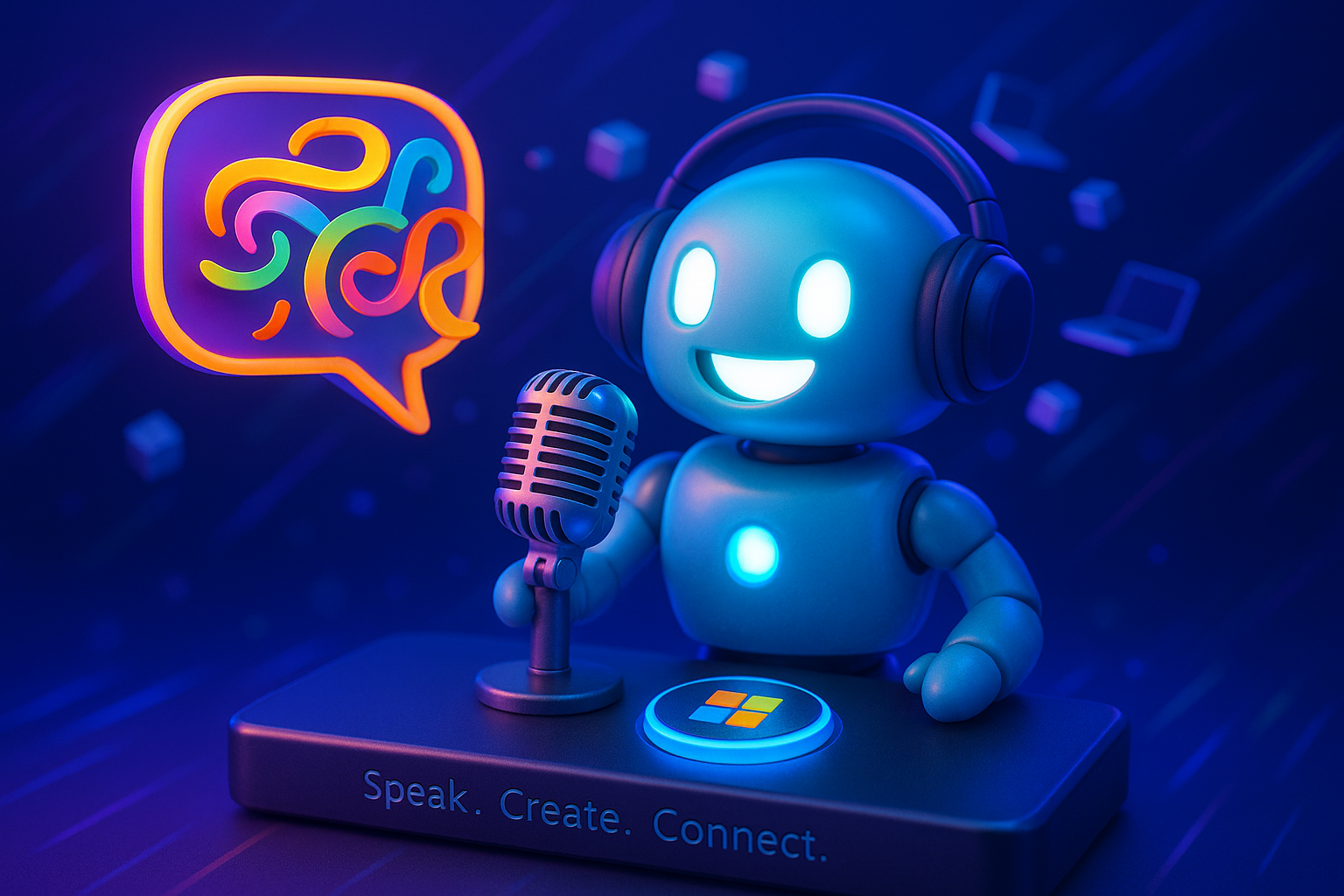
Microsoft introduced two new in-house AI models: MAI-Voice-1 for text-to-speech and MAI-1-preview for language tasks. Both are in preview and aimed at developers and enterprises seeking first-party options for voice and text experiences.
What was announced
- MAI-Voice-1: A text-to-speech model designed for lifelike, expressive delivery suitable for assistants, narration, and content creation.
- MAI-1-preview: A foundation language model focused on instruction following, summarization, and conversational use cases.
Both models are launching in preview and are positioned for developers and enterprises that want Microsoft-managed options for speech and language workloads.
Core capabilities and modalities
- MAI-Voice-1 targets high-fidelity, natural-sounding speech with attention to tone and style for realistic voice interactions.
- MAI-1-preview operates in the text domain for chat, productivity workflows, and general instruction following.
How this fits into Microsoft’s broader AI work
Microsoft continues to invest in speech and language systems across its platforms. Recent Azure AI Speech updates emphasized more natural and expressive TTS, including new high-definition voices and broader multilingual support. These updates provide context for MAI-Voice-1 and its focus on expressive delivery. Details.
Coverage also notes the company’s strategy to expand first-party models for a range of developer and enterprise needs while continuing to support a broader model ecosystem.
Performance benchmarks
Microsoft has not published standardized benchmarks or third-party evaluations for MAI-Voice-1 or MAI-1-preview as part of the initial reveal. Early communications emphasize capabilities and preview availability.
Safety and responsible AI
The models align with Microsoft’s Responsible AI approach, which prioritizes safeguards and enterprise controls. Microsoft’s speech technologies have shipped with governance features such as watermarking and gated access for personal voice creation to deter misuse and support provenance. Learn more.
Availability and access
- Preview status: Both MAI-Voice-1 and MAI-1-preview are available in preview.
- Access channels: Developer onboarding is expected through Microsoft’s standard AI platforms and portals.
- Regions and pricing: Regional availability, quotas, and pricing will follow in Microsoft’s service documentation and updates during the preview period.
Intended users
- Developers building voice-enabled experiences, chat systems, and productivity tools.
- Enterprises seeking Microsoft-managed models with governance and compliance features.
- Product teams piloting speech and text modalities in Copilot-style or domain-specific solutions.
Where this positions Microsoft
The dual-model preview expands Microsoft’s internal AI portfolio across speech and text, complementing existing platform investments and offering first-party choices alongside partner models. A supporting report highlights the preview status and intent to deliver integrated, company-managed options. Read more.
Informational snapshot
| Model | Modality | Described focus | Status | Primary users |
|---|---|---|---|---|
| MAI-Voice-1 | Speech (TTS) | Expressive, natural-sounding speech for assistants, narration, and content | Preview | Developers and enterprises building voice experiences |
| MAI-1-preview | Text (LLM) | Instruction following, conversational output, productivity scenarios | Preview | Teams integrating chat, summarization, and knowledge workflows |
What is not in the preview
- Benchmarks: No standardized or third-party evaluations have been shared.
- Regional specifics: Regions, data residency, and latency details are not listed yet.
- Pricing and quotas: Not disclosed at this stage.
- SDK coverage: Endpoints, SDK matrices, and model cards are not detailed in the initial materials.
Key takeaways
- Microsoft is previewing two first-party models: MAI-Voice-1 for expressive text-to-speech and MAI-1-preview for general language tasks.
- Early communications prioritize capabilities and availability over formal metrics.
- Safety aligns with Microsoft’s Responsible AI practices, including voice watermarking and governance features in related services.
- Access is expected through Microsoft’s established AI platforms during the preview period.
Source: Neowin coverage of Microsoft’s two in-house AI models