

Google has brought its codename “Nano Banana” image editing to the Gemini app, underpinned by the company’s new Gemini 2.5 Flash Image model. The rollout folds multi-image composition, region-targeted edits, and character-consistent generation into Gemini’s consumer and pro experiences, with parallel access for developers and enterprises through Google’s platform stack. Full technical framing is in Google’s announcement: Introducing Gemini 2.5 Flash Image.
What’s new inside Gemini
With the integration, Gemini shifts from text-first generation to an image workflow that emphasizes continuity and edit control. Google positions the release around three pillars: compositional reliability when fusing references, localized prompt edits without masking, and stable character or object identity across iterations. These characteristics are aimed at production use rather than one-off creative samples.
“Nano Banana” is the internal codename aligned to Gemini 2.5 Flash Image; the consumer-facing effect is a consolidated image creation and editing flow inside Gemini with consistency, precision, and multi-image fusion as core behaviors.
Feature snapshot
| Capability | What it enables | Where it shows up |
|---|---|---|
| Character/object consistency | Maintains subject identity across edits and variants | Campaign assets, storyboards, episodic visuals |
| Localized prompt editing | Targets specific regions or attributes without manual masking | Background swaps, lighting changes, attribute adjustments |
| Multi-image fusion | Blends multiple references into coherent composites | Product placement, concept boards, scene assembly |
| Semantic grounding | Uses broader model knowledge for on-target references | Brand objects, domain-specific items, locations |
Access, rollout, and channels
Google is making the model broadly accessible: the Gemini app adds the editing flow to web and mobile, while developers and enterprises can integrate via AI Studio, the Gemini API, and Vertex AI. Coverage corroborates availability for both free and paid Gemini users. The update reduces multi-app handoffs by combining prompt-based generation with iterative edits and image blends in a single interface.
Pricing and usage-based details
Gemini 2.5 Flash Image uses Google’s tokenized billing for developers and enterprise integrations. In current documentation, output tokens are priced such that a standard image generation (up to common 1024×1024 settings) corresponds to an effective rate of roughly $0.039 per image. Input and output token rates follow the Gemini 2.5 Flash series pricing, with image operations calculated on output tokenization. Pricing references: Google AI for Developers: Pricing.
| Channel | Audience | Status | Indicative pricing |
|---|---|---|---|
| Gemini app (web/mobile) | Consumers/Pro | Rolling into app | Freemium tiers; app limits apply |
| Google AI Studio | Developers | Available | Usage-based tokens |
| Gemini API | Developers | Available | ~$0.039 per image (token-derived) |
| Vertex AI | Enterprise | Available | Managed access, usage-based |
Google’s stated pricing framework centers on tokens: output tokenization for images yields an effective per-image rate that developers can estimate in advance, with controls across AI Studio, the Gemini API, and Vertex AI.
Trust signals and provenance
Google is attaching invisible watermarking to generated and edited imagery via SynthID, designed for robust downstream detection without visible artifacts. The watermark layer is intended to support provenance checks within brand libraries and publisher workflows. Technical overview: Gemini Image models and SynthID.
| Governance element | Purpose |
|---|---|
| SynthID invisible watermark | Identify AI-created/edited assets in distribution pipelines |
| Ecosystem alignment | Complements Content Credentials in partner tools and asset managers |
Ecosystem developments: Adobe adds Gemini 2.5 Flash Image
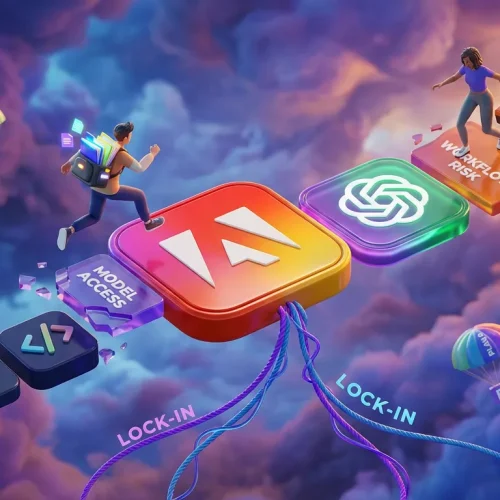
In a related move, Adobe announced that Google’s Gemini 2.5 Flash Image is now selectable as a partner model in Adobe Firefly and Adobe Express. The integration brings character-consistent generation and prompt-driven edits to Firefly’s Text to Image module and extends to Express for quick-turn creative production. Adobe’s multi-model approach allows teams to choose between Firefly’s native models and partner models within familiar workflows. Announcement: Adobe Firefly and Adobe Express add Gemini 2.5 Flash Image.
The cooperation signals ongoing interoperability across creative stacks: Google’s image model can sit alongside Adobe’s pipelines for layout, vector, and raster work, with provenance aligned through Content Credentials in Adobe’s ecosystem and watermarking from Google’s side.
What the codename signals and market context
External coverage identified “Nano Banana” as the codename associated with Google’s latest image effort now surfaced in Gemini. Reporting indicates access for both free and paid users, reflecting a broader push to place production-grade editing features into mainstream consumer and pro endpoints rather than confining them to developer previews or separate experiments. Coverage: Axios on Google’s ‘Nano Banana’ push.
The update arrives amid intensifying competition around image consistency, localized edits, and multi-reference composition. These areas are central to campaigns, sequences, and brand-controlled visuals. Vendors are simultaneously emphasizing governance, detectability, and interoperability, responding to distribution requirements from publishers and enterprise content systems.
Operational impact for teams
The combination of image generation, region-specific editing, and multi-image blending inside Gemini consolidates work that previously required multiple exports and round-trips across tools. For organizations, availability through Vertex AI and the Gemini API places these controls behind auditable, managed access, while the watermark layer addresses provenance demands in production pipelines.
Model framing and positioning
Google’s materials underscore that Gemini 2.5 Flash Image is intended for both original generation and editing, with character and object stability treated as first-order goals. The emphasis on semantic grounding is aimed at reducing off-target interpretations when prompts reference brand objects, domain-specific elements, or particular locales. Multi-image fusion is framed as a production tool designed to reduce artifacts across styles and sources.
Consistency, localized control, and reference fusion are the current fault lines in image AI; Google’s move brings these into a single, widely accessible surface with enterprise hooks and watermark-backed provenance.
At-a-glance
| Item | Detail |
|---|---|
| Model | Gemini 2.5 Flash Image (codename “Nano Banana”) |
| Core features | Character/object consistency, localized prompt editing, multi-image fusion |
| Access | Gemini app; Google AI Studio; Gemini API; Vertex AI |
| Pricing (dev/enterprise) | Token-based; ~ $0.039 per image equivalent (current documentation) |
| Provenance | Invisible SynthID watermark on generated/edited images |
| Ecosystem | Selectable partner model in Adobe Firefly and Adobe Express |
Bottom line
By aligning Gemini’s consumer surface with the Gemini 2.5 Flash Image model, and extending the same capabilities to developers and enterprises, Google is moving character consistency, region-targeted edits, and multi-image fusion into everyday workflows. The model’s token-based pricing provides predictable cost estimation for software teams, while watermark-backed provenance and partner integrations signal an ecosystem push oriented around production reliability as much as creativity.