
Google’s Latest Image Model Sets a New Benchmark
Nano Banana Pro is live, marking Google DeepMind’s highest-fidelity image generation and editing model to date. The launch introduces stronger text-in-image rendering, tighter control over composition and lighting, and output quality designed for professional brand and production needs. The model is available to consumers in the Gemini app and to developers via the Gemini API across Google AI Studio and Vertex AI. Read Google’s official announcement.

Why Nano Banana Pro Matters for Creators
Nano Banana Pro advances core capabilities that matter for creators, startups, and brand teams:
- High-fidelity visuals for brand work: Improved scene understanding and image synthesis aim to reduce retouching and rework on production assets.
- Text that holds up in layout: The model is designed to render clearer, more consistent typography inside images, critical for posters, packaging mockups, social graphics, and OOH concepts.
- Fine-grained creative control: Prompts can define camera angle, lens feel, lighting, palette, and spatial balance for more predictable composition.
- Responsible transparency: Outputs include imperceptible SynthID watermarks, and many consumer contexts also apply visible watermarking for clarity.
- Built for production pipelines: Access via the Gemini API in Google AI Studio and Vertex AI supports scalable creative operations.
For creators and marketers, the headline is straightforward: higher-quality images with more reliable on-image text and tighter creative control delivered where people already work, from the Gemini app to enterprise-grade APIs.
At a glance
| Area | What’s new with Nano Banana Pro |
|---|---|
| Image fidelity | Richer detail, cleaner edges, and improved scene coherence aimed at “studio-grade” outputs for campaign and product work. |
| Text in images | More accurate text rendering and layout control for headlines, labels, and multilingual content. |
| Creative control | Prompting control over camera, lighting, palette, and composition to reduce trial-and-error. |
| Editing | Model-driven edits and variations to iterate on concepts without starting from scratch. |
| Transparency | Embedded SynthID watermarking for provenance, with visible watermarking applied in many consumer experiences. |
| Access | Gemini app for consumers, Gemini API via Google AI Studio and Vertex AI for developers and enterprises. |
Deep Dive: Google’s Prompting Tips for Nano Banana Pro
Google published a companion post outlining how the model responds to well-structured prompts, with a focus on creative clarity and text fidelity. See the official tips. Key themes highlighted by Google include:
- Comprehensive scene specification: The guidance emphasizes describing subject, setting, composition, mood, and style together. The intent is to provide the model with the full creative brief in a single, cohesive prompt to reduce ambiguity and improve first-pass quality.
- Camera and lighting direction: Google underscores the value of calling out lens characteristics, vantage point, and lighting style (for example, soft diffused studio light, rim lighting) to steer the model toward a consistent aesthetic.
- Explicit text placement and styling: The tips stress precise instructions for the words to appear in the image, their position, scale, case, and typographic flavor, which is especially important for posters, packaging comps, banners, and localized campaigns.
- Iterative constraints instead of rewrites: Rather than restarting from scratch, the post highlights iterative adjustments that preserve layout or typography while refining background, contrast, or spacing, supporting tighter creative feedback loops.
- Clarity on limits and resolutions: The guidance notes that extremely small text and dense data visuals are more demanding; clearer instructions and larger canvases are encouraged for legibility and layout accuracy.
Google’s tips frame prompts less as one-off instructions and more as compact creative briefs spanning subject, style, spatial layout, lighting, and text specifics to yield predictable, production-ready results.
Transparency and Watermarking
Google’s rollout maintains a focus on content provenance. Images created or edited with Nano Banana Pro include imperceptible SynthID metadata for detection and verification. Google also applies visible watermarking in many consumer experiences so that audiences understand content origins at a glance. For broader context on the approach, Google has detailed its SynthID program and tools, including detection support across media types. Read more on SynthID.
Ecosystem Support: Who’s Already Onboard?
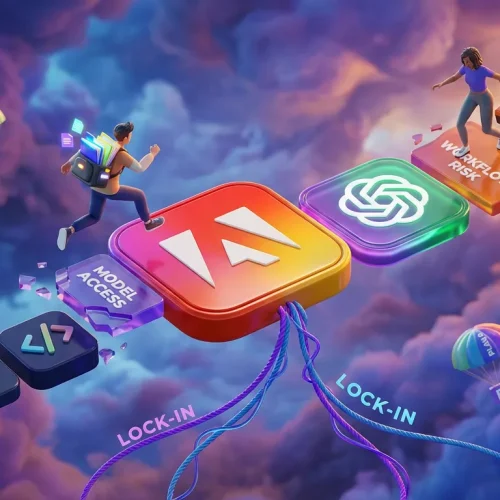
Adobe announced support for Google’s new image model, bringing Nano Banana Pro into Firefly and Photoshop. According to Adobe’s post, the integration focuses on prompt-based image generation, refined on-canvas edits, improved text-in-image, and better control over aspect ratios, aimed squarely at professional creative workflows in design, marketing, and production. Read Adobe’s announcement.
As of publication, Adobe is the first major creative platform with a public announcement of support. We will track additional partner rollouts as official statements are issued.
Availability and Access
- Consumers: Accessible in the Gemini app for concepting, mockups, and shareable visuals.
- Developers and enterprises: Available via the Gemini API across Google AI Studio and Vertex AI to embed image generation and editing into production workflows and tools.
- Provenance: Outputs include SynthID watermarking, and visible watermarking is added in many consumer-facing contexts for clarity.
What This Means for Creators, Startups, and Brand Teams
For design-led founders, creative directors, and marketers balancing speed with polish, the significance of Nano Banana Pro is less about novelty and more about production readiness:
- Better first drafts save time: Higher-fidelity outputs with stronger text handling can reduce rounds of cleanup and hand-tuned layout fixes.
- Brand consistency from the prompt: Lighting, palette, and camera direction help keep assets aligned with brand art direction even at early concept stages.
- Global campaigns, fewer hiccups: Clearer multilingual text rendering supports localization without breaking composition or legibility.
- A path from experimentation to scale: With consumer access in the Gemini app and enterprise deployment via API, teams can move from exploration to integrated production flows.
The model’s promise sits at the intersection of quality and control: concept fast, keep typography intact, preserve art direction, and route finished work into the same pipelines where teams already operate.
Editor’s Note on Scope and Coverage
This post focuses on what’s new, where it is available, how Google positions the model’s strengths, and which partners have publicly announced support. Official sources from Google and Adobe provide direct detail for readers who want to go deeper into the launch and the accompanying prompting guidance.