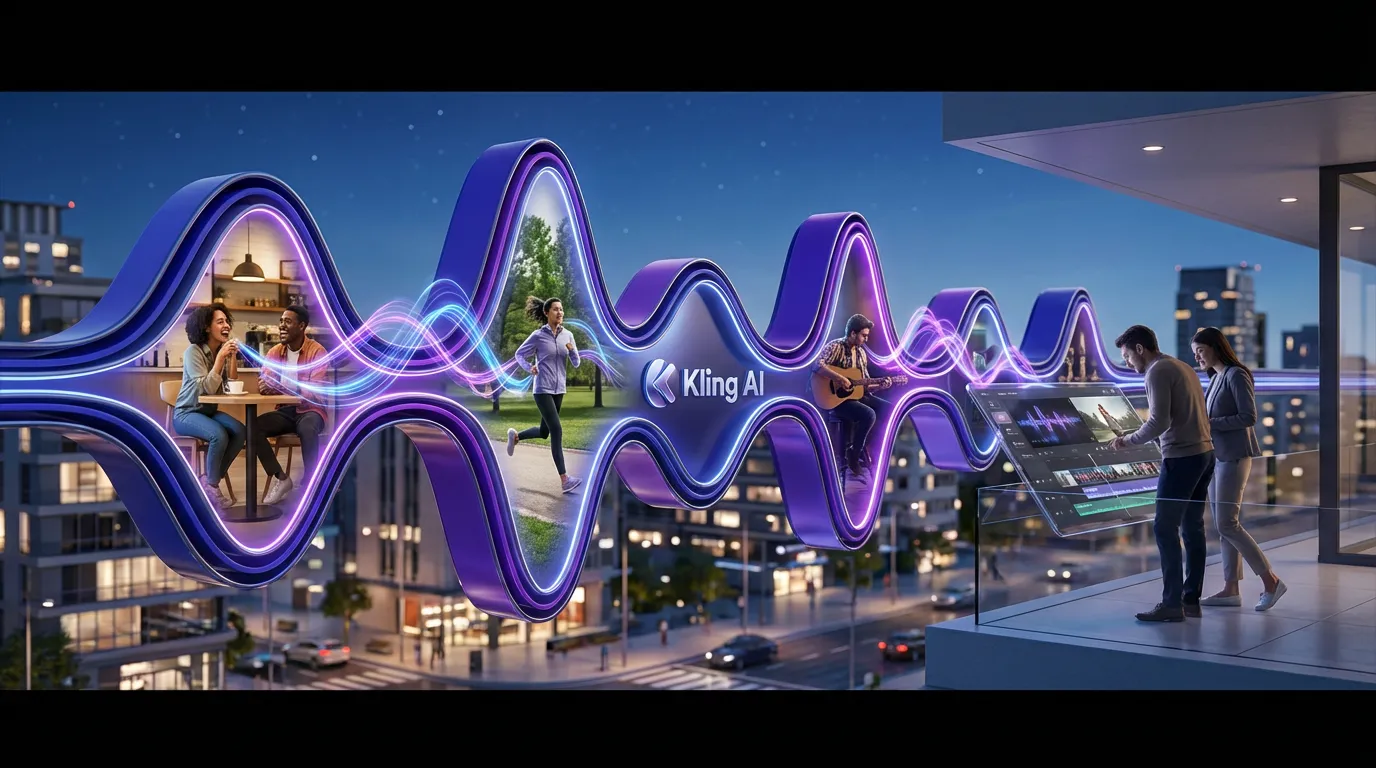
Kling’s latest leap, Kling AI, is less about prettier pixels and more about finishing the job. Kling 3.0 introduces native, synchronized audio inside the video generation meaning dialogue, ambience, and sound effects can arrive with the clip instead of being stitched on later. In the current AI video arms race, this is one of the few upgrades that changes the daily workflow, not just the demo reel.
The headline: Kling 3.0 can generate video plus audio in the same pass, with an emphasis on speech that stays aligned to faces and scene timing. Public early looks and listings also point to multi-shot control structured sequences instead of single, isolated clips alongside the usual promises: smoother motion, better realism, and stronger consistency.
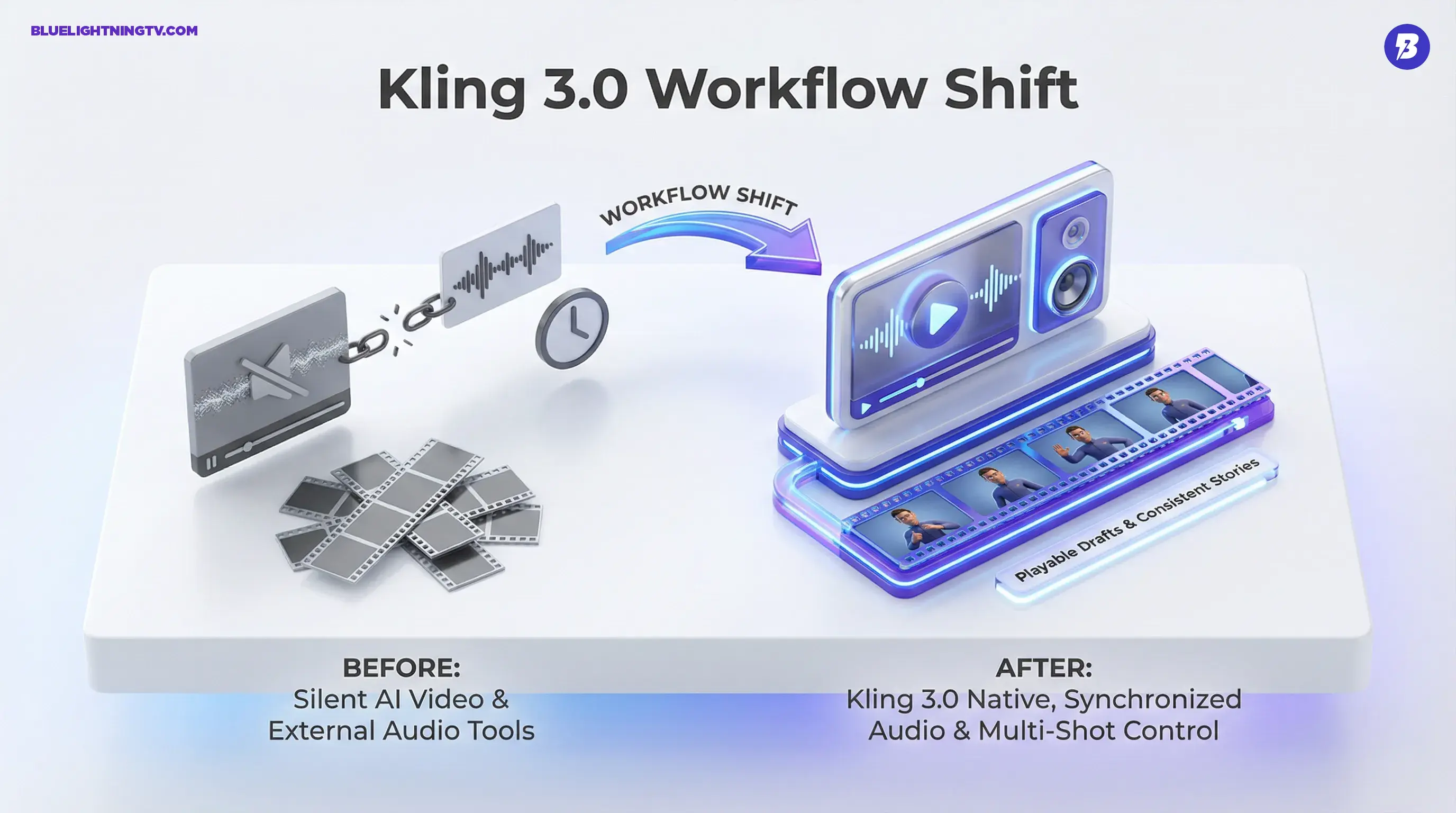
What Kling 3.0 shipped
One practical reference point for the 3.0 feature bundle is the model listing on Artlist, which highlights multi-shot control, reference-driven consistency, and native audio as the core differentiators.
Generative video’s new bar isn’t can it look cinematic?
It’s does the first draft arrive feeling like a scene? Audio is the cheat code for that.
Native audio changes workflows
Creators already know the truth: silent AI video is a half-finished deliverable. Even if the visuals are strong, you still need to build the emotional reality voice, timing, SFX, room tone, music somewhere else. That somewhere else is where schedules go to die.
Kling 3.0’s native audio approach compresses a common modern workflow:
| Workflow step | Before native audio | With Kling 3.0 |
|---|---|---|
| Dialogue | Generate or record elsewhere, then sync | Generated in-scene, time-locked |
| SFX + ambience | Library pulls or separate gen tools | Arrives with the clip |
| Client previews | Imagine the sound later energy | Reviewable rough cuts faster |
This doesn’t eliminate post. It changes where post begins. For teams shipping social ads, concept trailers, or short narrative beats, the difference between silent clip and scene with sound is the difference between interesting and usable.
What native really means
Kling 3.0’s pitch is not just we can add music. It’s synchronized audio generated alongside the visuals especially speech timing. The most creator-relevant parts:
- Dialogue that’s aligned to faces (the make-or-break for any talking character use case)
- Ambient soundscapes that match environments (street noise, wind, room tone)
- Action-linked effects (footsteps, impacts, movement cues)
In other words: the system is moving toward the one prompt to one clip that plays model that’s quickly becoming the standard across top-tier video tools.
How it stacks up now
Kling isn’t alone in this direction. Native audio is showing up across the category because it’s one of the few improvements that directly reduces tool hopping.
Two recent examples we’ve covered:
- Sora 2 adds synchronized audio (OpenAI frames this as shipping-ready drafts, not silent demos)
- VIDU 3 adds native audio (similar bet: compress the rough-draft pipeline)
Kling 3.0’s differentiator will come down to two things creators actually feel:
- Control: can you steer the audio tone, pacing, character assignment without chaos?
- Consistency: can you revise a line without the whole scene re-rolling into a different universe?
Multi-shot control matters
Native audio is the headline, but Kling 3.0’s other big signal is the push toward multi-shot sequencing often described by creators as director-style control. This is the part that moves AI video from clip generator toward edit building blocks.
Why it matters: creators don’t ship one shot. They ship sequences open, beat, payoff, CTA, end card. Multi-shot tooling is what makes AI video behave more like production, even if the shots are still short.
Single clips get likes.
Sequences get budgets.
The moment a tool can reliably output a short sequence with continuity same character, same vibe, consistent wardrobe and props teams can start treating it like a real pre-production engine: pitch comps, ad variants, story prototypes, and social series formats.
The caveats creators should watch
This is a meaningful upgrade, but it’s not a magic wand. Native audio introduces its own very specific new problems, and you’ll want to notice them early.
Audio editability
Most native-audio video tools today export baked audio (a single combined track). That’s great for speed, less great if you need clean stems for:
- separate dialogue music SFX mixing
- ducking and compression for platform loudness
- brand-specific sound design
Voice personality drift
Even when dialogue is intelligible, brand voice is another story. Expect early outputs to range from totally fine for drafts to why does my luxury skincare ad sound like an airport announcement? The gap between understandable and on-brand is where teams still spend time.
Revision stability
The real production test is whether you can say:
- same scene, new line
- same character, different emotion
- same timing, quieter ambience
without the model reinterpreting everything. If Kling 3.0 nails stability here, it becomes a serious tool for campaigns, not just experiments.
Who benefits first
Kling 3.0’s native audio is most valuable for creators who live in tight turnaround and high iteration:
- Performance marketers building many ad variants fast
- Social teams chasing trends where timing matters more than perfection
- Agencies pitching concepts that need to feel real in the room
- Narrative-first creators prototyping dialogue beats and tone before committing to full production
If you’re doing high-end finishing, you’ll still do high-end finishing. But your first pass can land closer to a rough cut because sound makes people react like it’s a real piece of media.
Bottom line
Kling 3.0’s biggest move is native, synchronized audio inside AI video generation. That’s not a cosmetic upgrade it’s a workflow upgrade. It shortens the path from cool clip to reviewable scene, and it signals where the category is headed: generative tools that ship drafts that actually play.
The hype test is simple: does it still feel good after the tenth iteration, when you’re revising lines, swapping beats, and trying to keep a character consistent across cuts? If Kling 3.0 holds up under that pressure, it’s not just new features it’s a new default expectation for AI video.