HeyGen Digital Twin Upgrades to Avatar IV for Realistic Full-Body Video Avatars
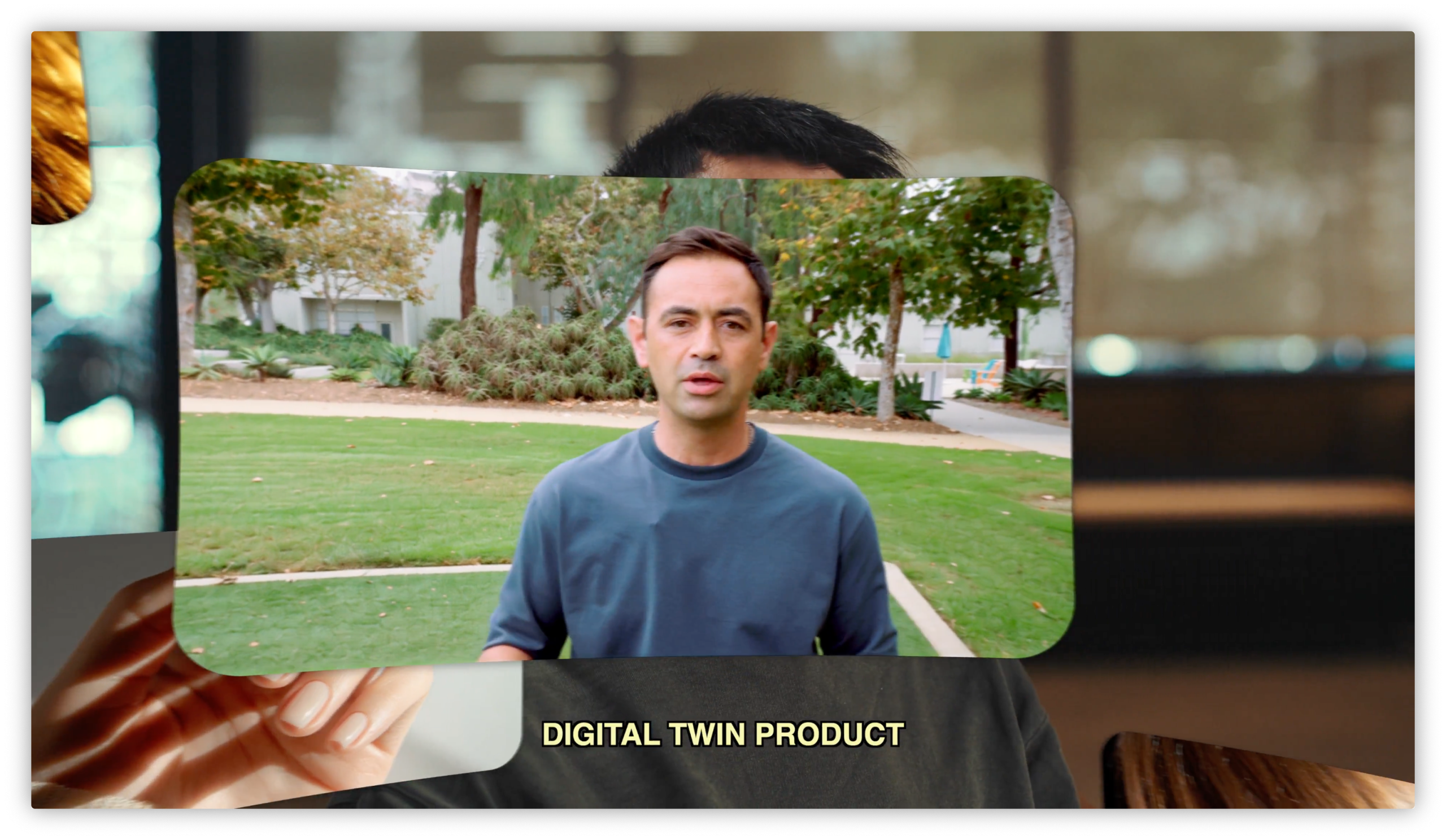
HeyGen has upgraded its Digital Twin feature to run on Avatar IV, the company’s newest avatar model designed for scalable, on-brand video production with markedly more lifelike performance. The update is live now in HeyGen’s Studio and emphasizes expressive, full-body motion, timing-aware gestures, and delivery that adapts to a user’s style, positioning Digital Twin as a tool for creators and operators who want camera-free production at speed.
If you signup for HeyGen please support the channel and use our affiliate link.
What’s New in Avatar IV
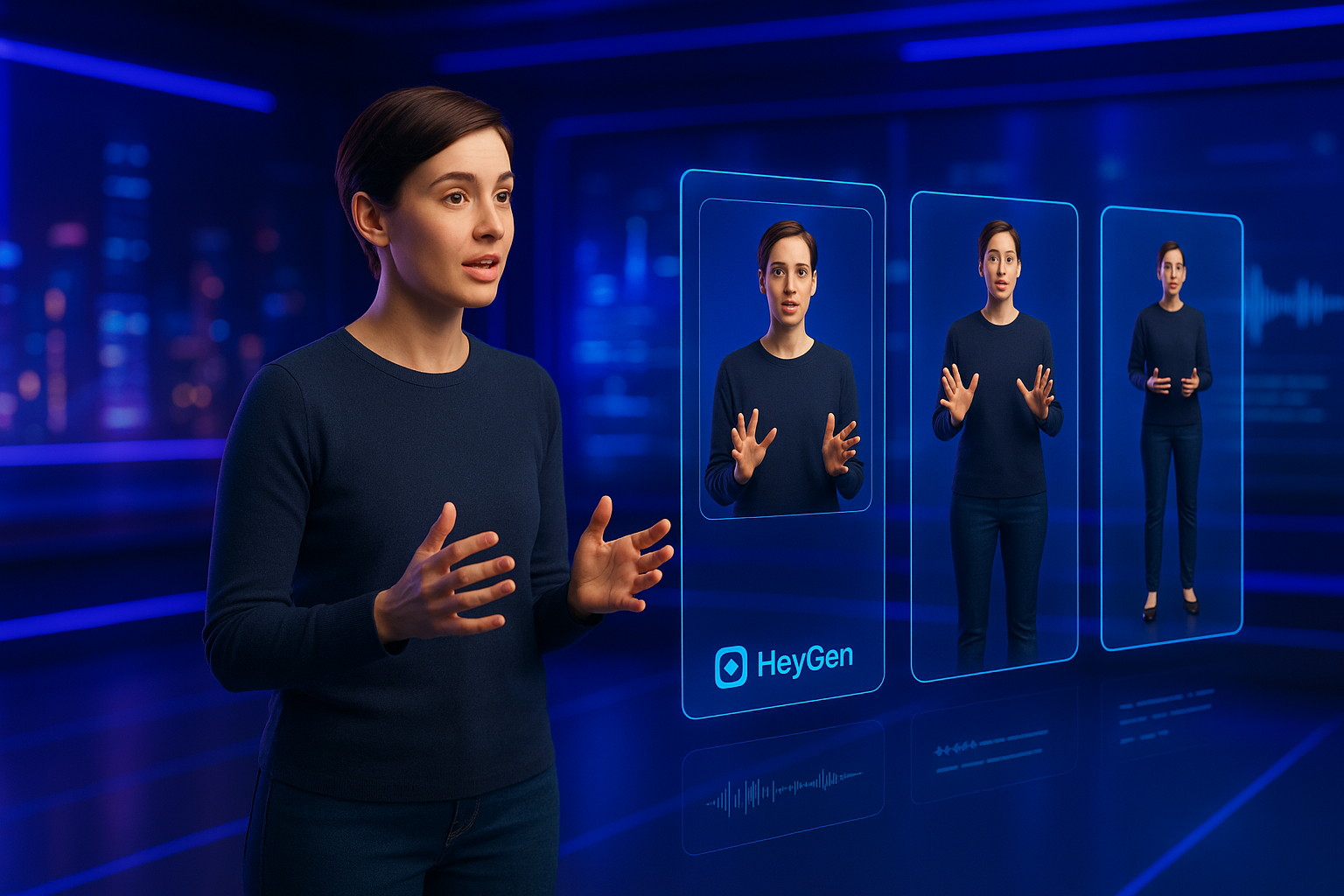
Avatar IV expands beyond the upper-torso constraints of earlier generations, adding coordinated hand articulation, weight shifts, and micro-expressions that better track speech rhythm. The model interprets emphasis and pacing so that gestures land where lines do, improving presence across portrait, half-body, and full-body framing. Early materials from the company also highlight stronger “gesture IQ,” particularly for longer scripts where variety and timing previously lagged.
| Capability | What Avatar IV Adds | Practical Implication |
|---|---|---|
| Gesture expressiveness | Broader hand and arm motion with timing that tracks line delivery | More persuasive delivery in product explainers and executive updates |
| Facial dynamics | Micro-expressions tied to emphasis and tone | Improved credibility in close-ups and interview-style pieces |
| Full-body staging | Support for portrait, half-body, and full-body frames | Greater flexibility in scene design and on-screen brand presence |
| Stylistic adaptation | Delivery that mirrors a user’s mannerisms and pacing | Consistency with established brand voice without reshoots |
Company Framing and Claims
One photo. One script. Just your voice… Most avatars sync to your words. Avatar IV interprets them.
The positioning from HeyGen’s leadership underscores a shift from simple lip-sync to performance interpretation. CEO Joshua Xu described Avatar IV as the company’s most advanced avatar to date, emphasizing realism and timing intelligence in public posts. For additional context on the company’s framing and rollout, see Xu’s announcement on LinkedIn and HeyGen’s product-launch materials on the company community site: Introducing Avatar IV.
Watch the Demo
Where the Tech Stands: Progress and Limits
HeyGen is promoting Avatar IV output as approaching “indistinguishable” from real video. That ambition captures the arc of the technology, but it remains marketing language: while the leap in gesture intelligence and full-body plausibility is evident in demos, attentive viewers may still encounter occasional artifacts, particularly around complex hand motion, swift head turns, and high-velocity phrasing. These anomalies are typical of state-of-the-art generative video systems and have narrowed with each generation; they have not vanished entirely.
In practice, the improvements are most pronounced in medium-length takes with conversational cadence. The model’s ability to vary posture, align emphasis, and keep hand motion on-beat is a meaningful step for explainers, onboarding modules, and executive communications. For longer monologues with dramatic swings in energy or emotion, the tech now manages continuity more credibly than prior models, though minor stiffness can still appear during wide gestures or rapid transitions between beats.
Use Cases: Who’s Likely to Benefit Now
The immediate value proposition targets creators, entrepreneurs, service providers, and executives who rely on frequent on-camera communication. In these settings, Digital Twin on Avatar IV allows users to keep a consistent, branded on-screen presence while adjusting messaging via script, without the logistics of shoots and reshoots. That reduces production overhead and smooths iteration cycles for:
- Product education and onboarding where pacing, clarity, and visual emphasis influence adoption
- Executive updates and investor comms that benefit from a stable on-camera identity with rapid turnaround
- Creator channels and series requiring weekly or seasonal content without studio time
- Localized campaigns where the same on-screen presence supports multiple languages and markets
HeyGen has also pointed to real-world deployments of Digital Twin workflows. A high-profile example: LinkedIn co-founder Reid Hoffman’s “Reid AI,” which the company cites as a customer story illustrating how an AI-driven presence can scale public speaking and content across formats and languages. Details are outlined in HeyGen’s case study: Reid AI.
Industry Context
The broader market for generative video is rapidly converging on more expressive, full-body performance. Across the category, vendors have focused on three fronts: naturalistic hand movement, better lip-sync under fast speech, and style adaptation that carries through longer scripts. Avatar IV’s emphasis on timing-aware gestures and full-body staging aligns with this trend, aiming to move avatar video from “talking head” formats toward more cinematic presence.
For teams balancing speed and polish, these gains shift the calculus. If Avatar IV can consistently deliver plausible hand articulation and on-beat emphasis, digital doubles move closer to practical stand-ins for routine comms, not just novelty segments. While seasoned viewers can still spot synthetic tells, the gap between AI-driven delivery and conventional studio work has narrowed, particularly for mid-shot explainers and corporate updates where content clarity often outweighs cinematic nuance.
Availability and Access
| Item | Status | Notes |
|---|---|---|
| Digital Twin on Avatar IV | Available now | Integrated into HeyGen Studio; existing Digital Twins benefit from model updates |
| Framing support | Portrait, half-body, full-body | Company demos emphasize wider gestures and stance changes |
| Gesture/Expression model | Timing-aware, style-adaptive | Interprets emphasis from script and voice to vary delivery |
| Intended users | Creators, entrepreneurs, service providers, executives | Targets brand building, education, and audience growth |
Signals to Watch
Two near-term indicators will help gauge the practical impact of Avatar IV:
- Consistency across longer scripts. The model’s ability to maintain varied, believable body language over multi-minute segments will determine whether it can anchor full episodic formats.
- Controls for tone and pacing. HeyGen’s “Voice Director” concept, tools that steer delivery without manual retakes, could amplify Avatar IV’s strengths if widely adopted inside Studio. The company has begun linking these ideas in product updates: Voice Director & Avatar IV.
Bottom Line
HeyGen’s move to Avatar IV for Digital Twin is a notable, practical step forward for AI-driven on-camera presence: more expressive full-body motion, better timing, and a delivery style that tracks closer to the human origin than previous models. Marketing language around “indistinguishable” should be read as aspirational; subtle tells remain, especially in complex handwork or rapid shifts in energy. But for creators and operators optimizing speed, consistency, and brand alignment, particularly in explainers, onboarding, and executive comms, the upgrade meaningfully expands what can be produced without cameras or reshoots.
As with prior waves of generative video, the test now moves from demo reels to everyday workflows. If Avatar IV sustains its performance across a broad set of scripts and scenes, the Digital Twin use case will continue to blur the line between “synthetic” and “standard” production, bringing the industry one step closer to a flexible, software-first video stack.